
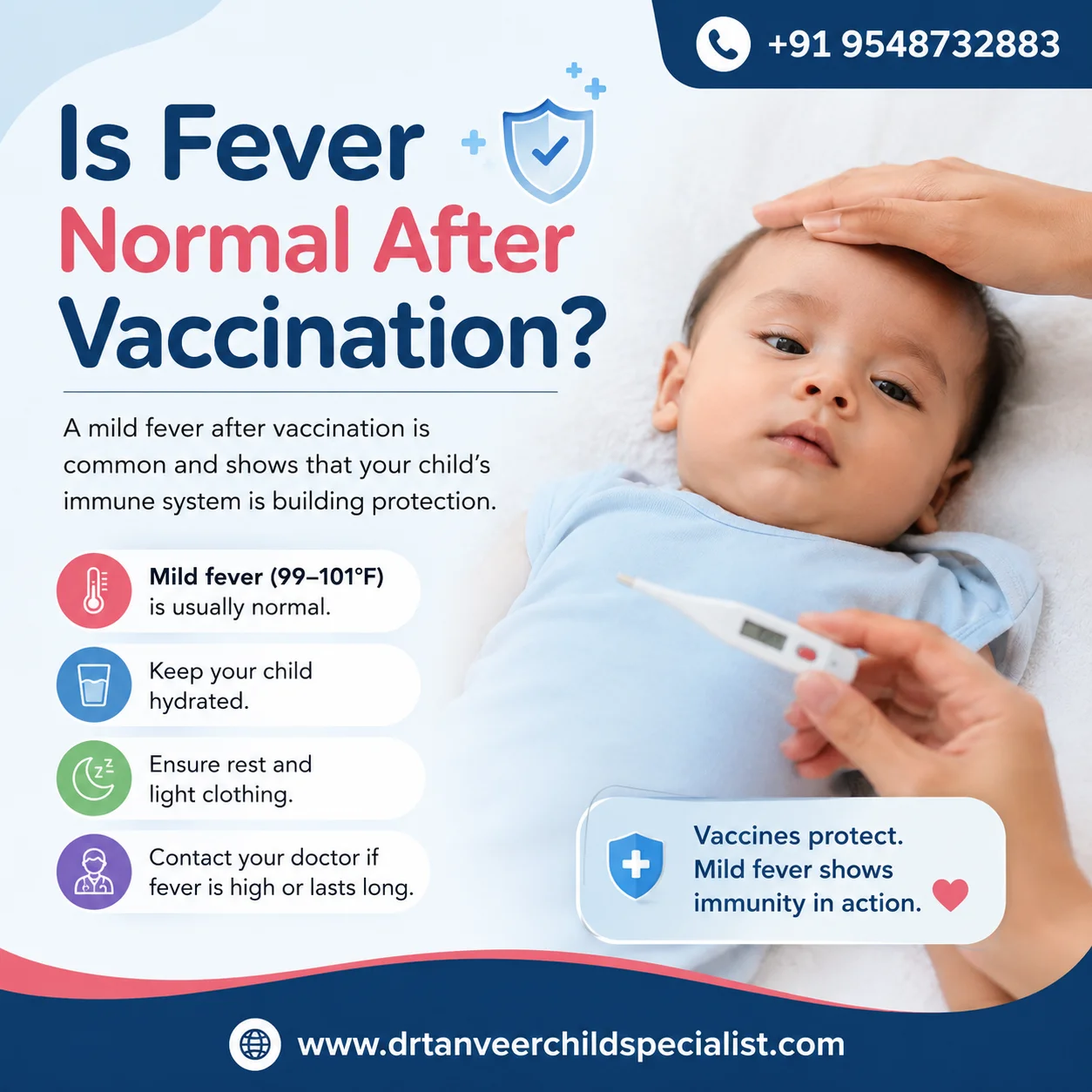
Yes. Fever after vaccination is common. It usually shows that the body is building protection. Many babies, children, and even adults may develop mild fever after a vaccine.
This reaction is temporary. It often appears within a day. It settles on its own in most cases. Parents should understand what is normal and what needs attention.
If you are following a proper vaccination schedule for babies in India, mild fever can be expected after some doses.
Why Does Fever Occur After Vaccination?
Vaccines prepare the immune system. They introduce a small and safe part of a virus or bacteria. The body reacts to it.
This reaction activates immune cells. The body starts producing antibodies. During this process, temperature may rise slightly.
This is not an infection. It is a controlled immune response. That is why fever after vaccination is considered normal in most cases.
In children receiving care under proper immunization or vaccination guidance, such reactions are monitored and managed easily.
How Common Is Fever After Vaccination?
Fever is one of the most common side effects. Not every child gets it. But many do.
It is more common after combination vaccines. It can also appear after booster doses.
The intensity is usually low. Most cases remain between 99°F to 101°F.
Parents often worry when they see fever. But in most situations, it is a normal response.
Which Vaccines Can Cause Fever?
Some vaccines are more likely to cause mild fever. This does not mean they are unsafe.
Common examples include:
- DPT or pentavalent vaccines
- Hexavalent vaccines
- Pneumococcal vaccine (PCV)
- MMR vaccine
- Flu vaccine
Each child may react differently. Some may not develop any fever at all.
If your child is receiving vaccines as part of routine care or during a baby health checkup, your doctor will guide you about expected reactions.
Is Fever Normal After Vaccination in Babies?
Yes. Fever after vaccination in babies is very common. Their immune system is still developing. So the response can be slightly noticeable.
In newborns and infants, even a mild rise in temperature may feel concerning. But most cases are harmless.
Babies receiving care through proper neonatal care services are closely monitored for such reactions.
Parents should focus on the baby’s activity. If the baby is feeding well and active, mild fever is usually not a concern.
Is Fever Normal After Vaccination in Older Children and Adults?
Yes. Older children and adults can also develop mild fever after vaccination.
This happens due to the same immune response. The body recognizes the vaccine and starts building protection.
Adults may also feel body ache or tiredness. These symptoms usually settle within a short time.
In growing children, tracking child growth milestones alongside vaccination helps ensure overall development is on track.
When Does Fever Start After Vaccination?
Fever after vaccination usually starts within 6 to 24 hours.
In some cases, it may begin a little later. This depends on the type of vaccine.
For most routine vaccines, parents notice fever on the same day or the next day.
The timing is predictable. That is why doctors often inform parents in advance.
How Long Does Fever Last After Vaccination?
Fever after vaccination does not last long. It usually settles within 1 to 3 days.
The peak often comes within the first 24 to 48 hours.
After that, the temperature gradually returns to normal.
If fever continues beyond this period, it should be evaluated.
Regular monitoring during early childhood is important. It is often part of services like child healthcare and routine checkups.
How to Manage Fever After Vaccination at Home?
Fever after vaccination is usually mild. It can be managed at home with simple care.
Focus on comfort. Do not rush to give medicine unless needed.
Helpful steps include:
- Keep your child well hydrated with breastmilk, formula, or fluids
- Use a digital thermometer to check temperature
- Dress your child in light and comfortable clothes
- Allow enough rest and avoid overstimulation
- Use a lukewarm sponge if temperature rises above 101°F
Paracetamol can be used if advised by a doctor. Avoid self-medication in very young infants.
Children with proper nutritional support, guided by infant and child nutrition care, often handle mild fever better.
Do’s and Don’ts After Vaccination
Simple care can make a big difference. Parents should follow basic precautions.
Do’s
- Monitor temperature regularly
- Observe feeding and activity levels
- Keep the child calm and comfortable
- Follow the next vaccine schedule on time
Don’ts
- Do not panic if mild fever appears
- Do not overdress the child
- Do not give medicine without advice in infants
- Do not skip future vaccinations due to fear
Guidance through parent counselling for child health and behavior helps families handle such situations with confidence.
When Is Fever After Vaccination Not Normal?
Most cases are mild. But some signs need attention.
Seek medical advice if you notice:
- Fever above 102°F
- Fever lasting more than 72 hours
- Continuous crying for long duration
- Poor feeding or refusal to drink
- Extreme sleepiness or irritability
- Breathing difficulty
- Seizures or unusual body movements
These symptoms are not common. But they should not be ignored.
If your child has ongoing health concerns like poor weight gain in children, closer monitoring after vaccination may be needed.
Common Myths About Fever After Vaccination
Many parents get confused due to myths. It is important to know the facts.
Myth: Fever means the vaccine is not suitable
Fact: Mild fever shows that the immune system is responding.
Myth: No fever means the vaccine did not work
Fact: Vaccines work even without fever.
Myth: Fever after vaccination is dangerous
Fact: Mild fever is expected and temporary.
Myth: Future vaccines should be avoided if fever occurs
Fact: Routine vaccines should not be skipped without medical advice.
Frequently Asked Questions
Is 101°F fever normal after vaccination?
Yes. This is a common temperature range after vaccination. It usually settles within 1–2 days.
Should I give paracetamol after vaccination?
It should be given only if required and advised by a doctor. Not every child needs it.
Can vaccines cause high fever?
High fever is less common. If it occurs, it should be evaluated.
What if there is no fever after vaccination?
This is also normal. The vaccine is still effective.
Medical Guidance and Care
This information is reviewed with clinical perspective.
Dr. Tanveer Ahmad is a pediatrician practicing in Roorkee since 2018. He provides care for newborns, infants, and children. His focus is on early diagnosis, preventive care, and healthy development.
Services include vaccination, growth monitoring, nutrition support, and management of childhood illnesses. You can learn more about the doctor or explore available child healthcare services.
Clinic Address:
Dr Hera Skin Hair & Children Hospital
Malviya Chowk, Near Bank of India
Roorkee, Uttarakhand – 247667, India
Phone: +91 9548732883
For appointments or queries, visit the contact page.
Final Note
Fever after vaccination is usually a normal response. It shows the body is building protection.
Parents should stay calm. Monitor the child. Seek help only if warning signs appear.
With proper care and timely vaccination, children stay protected against serious diseases.