
A newborn’s skin changes quickly during the first weeks of life. Peeling, tiny bumps, blotchy patches and mild rashes can surprise new parents, especially when they appear without warning. Many early skin changes are temporary and settle without treatment. Others need a closer look. The key is to consider the baby’s age, general condition, rash appearance and any symptoms that occur alongside it.
Why newborn skin can look different from day to day?
A baby’s skin is adapting to life outside the womb. It is delicate and can react to heat, moisture, friction, saliva, clothing and new surroundings. Some spots are part of normal newborn transition. Others are caused by irritation, inflammation or infection. A photograph taken in natural light can help a clinician understand how a rash changes, but it cannot replace an examination when a baby seems unwell.
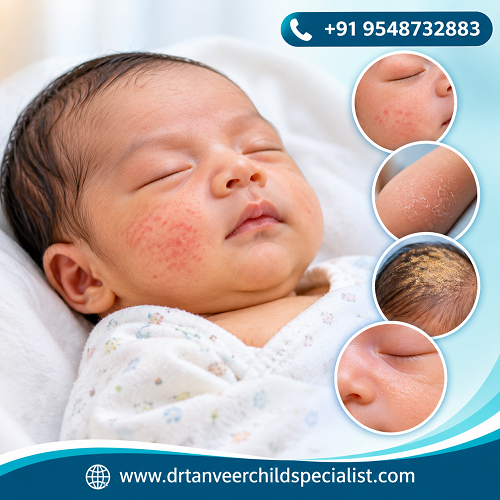
Common early skin changes
Milia: tiny white bumps
Milia are small white or yellowish bumps, often seen on the nose, cheeks or chin. They form when keratin becomes trapped near the skin surface. They are common in newborns and usually disappear on their own. Avoid squeezing them or applying acne creams.
Erythema toxicum: a blotchy newborn rash
This harmless newborn rash often appears during the first few days of life. It may look like red blotches with small pale or yellowish bumps in the centre. It can fade and reappear in different areas. A baby with uncomplicated erythema toxicum generally remains well, and the rash settles without specific treatment.
Baby acne
Small red bumps or whiteheads may develop on a baby’s face in the first weeks. Baby acne often improves over time. Use gentle cleansing and avoid harsh soaps, scrubbing, oily products or medicines intended for older children unless advised by a healthcare professional.
Heat rash
Tiny red or skin-coloured bumps can appear when sweat ducts become blocked, especially in hot or humid weather. The neck, chest, back and skin folds may be affected. Keep the baby comfortably cool, use light breathable clothing and avoid heavy creams that may worsen blockage. Do not overcool the baby.
Cradle cap
Cradle cap causes greasy yellow or white scales on the scalp. It is usually not painful or itchy. Gentle washing and softening of scales may help; do not pick or scrape them. Ask a clinician if the skin becomes inflamed, spreads, smells unpleasant or appears infected.
Dryness, peeling and birthmarks
Mild peeling during the first one or two weeks can be part of normal adjustment, particularly in babies born at term. Use simple, fragrance-free skin care and avoid frequent bathing with strong cleansers. Some babies also have birthmarks, such as flat pink patches or blue-grey areas. Record their location and appearance and mention them during routine newborn checks, especially if a mark changes rapidly, bleeds or becomes raised.
When a rash needs medical attention?
Seek prompt medical advice if a newborn develops a rash with fever, poor feeding, unusual sleepiness, breathing difficulty or a generally unwell appearance. Blisters, pus, rapidly spreading redness, swelling, skin warmth, painful-looking lesions or sores around the eyes or mouth should also be assessed. A baby younger than three months with a new rash and other symptoms needs a cautious approach.
Do not delay urgent care for clusters of fluid-filled blisters, particularly in a newborn. Some infections can look like ordinary spots at first but require rapid treatment. A purple or red rash that does not fade when pressed, especially with fever or illness, is an emergency warning sign.
Newborn skin care without over-treatment
Keep skin care simple. Use lukewarm water, gentle fragrance-free products when needed, clean soft clothing and a comfortable room temperature. Change wet or soiled nappies promptly and allow the skin to dry before putting on a fresh one. Avoid talcum powder, strong perfumes, adult cosmetics, home-made pastes and over-the-counter steroid or antifungal creams unless a clinician has advised them.
Parents do not need to treat every spot. Unnecessary products can irritate sensitive skin and make it harder to recognise the original problem. If you are unsure, take a clear photograph and ask a paediatrician rather than experimenting with several creams.
Make newborn checks part of the plan
During a newborn review, mention the rash’s start date, whether it is spreading, any products used and whether the baby is feeding and behaving normally. A paediatrician can assess the skin in the context of the baby’s overall health. Dr. Tanveer Ahmad offers paediatric consultations in Roorkee, including newborn and infant care. Parents can read about neonatal care and infant health and nutrition before discussing an individual concern.
Parents should also consider the baby’s comfort and general behaviour. A mild rash on an otherwise alert baby who feeds normally is different from a rash accompanied by poor feeding, fever or unusual drowsiness. Avoid applying several products at once because this can irritate the skin and make the cause harder to identify. If a clinician recommends a cream, use it only on the area and for the duration advised.
For related information, read routine baby health checkups and parent guidance on newborn care.
Address: Dr Hera Skin Hair & Children Hospital, Malviya chowk, Near Bank of India, Roorkee, Uttarakhand 247667
Contact Number: +91 9548732883
Email Id: info@drtanveerchildspecialist.com