
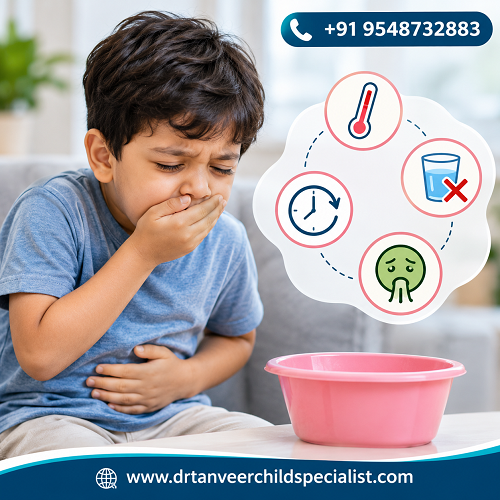
Vomiting can begin suddenly. A child may throw up after a meal, during a stomach infection, or alongside a fever. In many cases, symptoms settle with rest and careful fluid intake. However, repeated vomiting can also lead to dehydration or signal an illness that needs medical attention.
Knowing what to watch for helps parents respond calmly and seek care at the right time.
What may be causing the vomiting?
A short episode is often linked to viral gastroenteritis, commonly called a stomach bug. It may occur with diarrhoea, stomach cramps, nausea or fever. Food-related illness can also cause vomiting. Sometimes the trigger is outside the digestive system. Ear infections, urinary infections, respiratory illnesses, migraine, motion sickness and certain medicines may cause nausea or vomiting.
Less common but urgent causes include appendicitis, bowel obstruction, head injury or poisoning. The symptom alone cannot identify the cause.
Notice the pattern. Did vomiting start after a new medicine? Is there diarrhoea in the family? Does the child have a fever, localised abdominal pain or a recent injury? These details help a paediatrician assess the situation. Do not assume that every episode is food poisoning.
The first priority is hydration
When a child is alert and able to swallow, offer small, frequent amounts of an age-appropriate oral rehydration solution (ORS), especially when vomiting occurs with diarrhoea. Large drinks may trigger another episode, so try a few sips at short intervals and increase gradually if tolerated. Continue breastfeeding. For infants, ask a clinician for age-specific fluid advice; plain water is not an appropriate replacement for breast milk or formula in young babies. Avoid relying on fizzy drinks, undiluted fruit juice or very sugary beverages.
Once vomiting eases and the child feels hungry, return gradually to familiar foods that are easy to tolerate. There is usually no need to force food during active nausea.
The immediate concern is whether the child can keep fluids down and is passing urine normally.
Warning signs that should not wait
Seek urgent medical assessment if vomit is green or contains blood, or looks like coffee grounds. Severe or persistent abdominal pain, a swollen abdomen, a stiff neck, a severe headache, unusual confusion, difficulty waking, breathing difficulty or suspected poisoning also require urgent attention.
Vomiting after a significant head injury should be assessed promptly.
Dehydration can develop faster in babies and young children. Watch for much less urine than usual, a dry mouth or tongue, no tears when crying, sunken eyes, unusual sleepiness, marked irritability or a sunken soft spot in an infant.
If a child cannot keep even small amounts of fluid down, contact a doctor without delay. A very young infant with repeated vomiting needs prompt medical advice.
When a routine paediatric consultation is appropriate?
Arrange a medical review when vomiting keeps returning, continues beyond a short illness, affects feeding, is associated with weight loss, or occurs with persistent fever or diarrhoea. Infants deserve a lower threshold for assessment because fluid losses can become significant quickly.
A child who appears increasingly unwell should not be managed only with home remedies.
A paediatrician may ask about the number and appearance of episodes, fluid intake, urine output, bowel movements, fever, pain, recent meals, medicines and contact with sick people. Depending on the examination, tests may or may not be needed. Treatment depends on the underlying cause and the child’s age and hydration status. Do not give anti-vomiting medicines, antibiotics or adult medicines unless a clinician recommends them.
What parents can record before the visit?
A short symptom record is often more useful than trying to remember everything during an appointment. Note when vomiting began, how often it occurs, its colour, whether there is blood or green fluid, associated symptoms, what the child has been able to drink, and the last time the child passed urine.
Mention any new medicine, travel, possible exposure to unsafe food, or accidental access to chemicals or tablets.
Keep the child comfortable and practise careful handwashing, particularly if diarrhoea is present. Clean contaminated surfaces safely and avoid sharing towels or utensils during a suspected stomach infection. These steps may reduce spread to other family members.
A calm, timely response makes a difference
Most brief episodes of vomiting are not emergencies, but the child’s overall condition matters more than the number of episodes alone. Hydration, alertness, urine output, pain and the appearance of vomit help guide the next step. Parents in Roorkee can discuss recurring digestive symptoms, feeding concerns or illness during a child health consultation. Dr. Tanveer Ahmad provides paediatric consultations at Dr Hera Skin Hair & Children Hospital. Learn more about baby health checkups and paediatric care options, or use the clinic’s contact page to enquire about an appointment.
During recovery, return to the child’s normal routine gradually. Keep offering suitable fluids and observe whether urine output, energy and appetite are returning towards usual levels. If vomiting stops but the child remains unusually tired, develops new pain or begins vomiting again, seek further advice. Children with long-term medical conditions may need an individual hydration plan, so parents should follow the instructions given by their own clinician.
For related information, read child growth and nutrition guidance and the clinic’s doctor profile.