
Rainy season brings relief from heat. Kids enjoy the weather. They play indoors, watch rain, and stay active. But this season also increases health risks. Food contamination rises. Water quality becomes uncertain. Kitchens stay damp. All these factors affect what your child eats.
That is why following rainy season food safety tips for kids is not just helpful. It becomes necessary for daily routine.
Children have sensitive digestion. Their immunity is still developing. Even a small mistake in food hygiene can cause stomach infections. Parents need to focus on food safety along with nutrition.
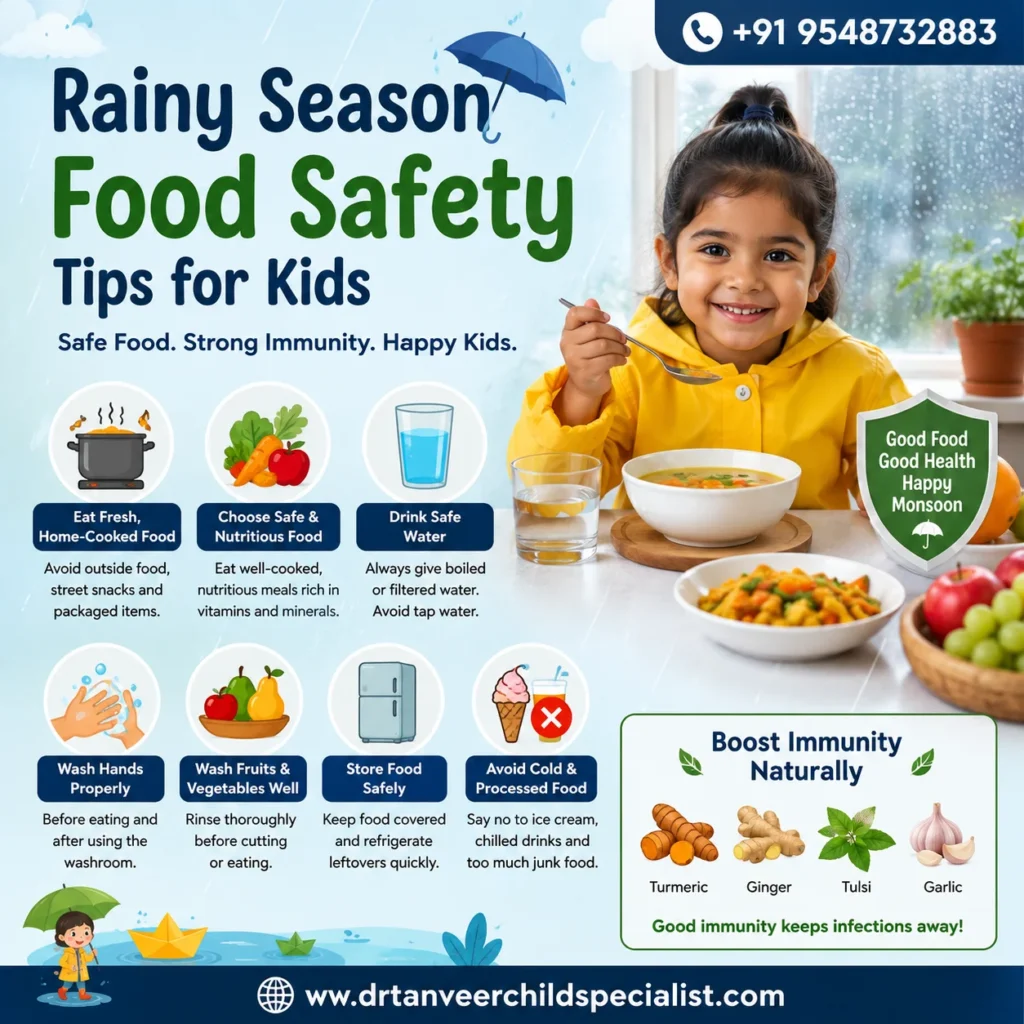
Why Food Safety Becomes Critical in Monsoon?
Monsoon creates a perfect environment for bacteria and viruses. Moisture stays in the air. Food spoils faster. Water sources can get contaminated easily.
Kids are more vulnerable in this situation. Their body reacts quickly to unsafe food. Common issues include:
- Loose motion
- Vomiting
- Fever
- Stomach pain
- Loss of appetite
Following proper rainy season food safety tips for kids reduces these risks. It also helps maintain energy and digestion.
Where Most Parents Go Wrong?
Many parents focus only on what to feed. They ignore how food is prepared and stored. This creates problems.
Common mistakes include:
- Keeping cooked food outside for long hours
- Using unfiltered water for cooking
- Serving raw vegetables without proper cleaning
- Allowing kids to eat outside food frequently
Fixing these habits is the first step in applying rainy season food safety tips for kids effectively.
Understanding Hidden Food Risks During Monsoon
Food may look clean but still carry germs. Parents need to understand hidden risks.
Contaminated Water
Rainwater can mix with supply lines. This affects drinking and cooking water. Unsafe water is a major cause of infection.
Humidity and Damp Storage
Moisture allows bacteria to grow quickly. Stored food becomes unsafe faster than usual.
Cross-Contamination in Kitchen
Using the same knife or board for raw and cooked food spreads germs. This is often ignored.
Improper Handling of Leftovers
Reheating food multiple times reduces quality. It also increases the risk of bacterial growth.
These risks highlight why rainy season food safety tips for kids should be followed daily.
Core Food Safety Rules Every Parent Should Follow
Cook Fresh Meals Only
Prepare food in small quantities. Fresh meals are always safer. Avoid storing cooked food for long periods.
Use Safe Drinking Water
Always boil or filter water. Do not rely on untreated sources. This is one of the most important rainy season food safety tips for kids.
Keep Food Covered
Open food attracts insects and dust. Always store food in covered containers.
Wash Hands Before Cooking and Eating
Simple hygiene reduces infection risk. Teach children to wash hands regularly.
Smart Cooking Practices That Improve Safety
Cooking methods play a key role in food safety.
- Cook food at proper temperature
- Avoid half-cooked meals
- Use fresh ingredients daily
- Clean utensils before use
Steamed and boiled food works best in this season. These options are easier to digest and safer for children.
Food Choices That Support Digestion in Monsoon
During rainy season, digestion slows down. Heavy food creates discomfort. Kids may feel bloated or tired.
Light and simple meals are better choices.
- Khichdi with vegetables
- Moong dal with rice
- Vegetable soups
- Soft roti with dal
These foods are easy to digest. They align well with rainy season food safety tips for kids.
How to Handle Fruits Safely?
Fruits are important for immunity. But they must be handled carefully.
- Wash fruits under running water
- Soak in salt water before use
- Peel fruits whenever possible
- Avoid cut fruits from outside vendors
These steps reduce contamination risk significantly.
When to Be Extra Careful
Some situations need more attention.
- When your child eats outside food
- During travel in rainy season
- When water supply is uncertain
- If your child already has weak digestion
In such cases, follow rainy season food safety tips for kids more strictly.
Link Between Nutrition and Safety
Food safety and nutrition go together. Safe food alone is not enough. It should also support growth.
Balanced meals help improve immunity. This reduces infection risk naturally. You can explore more about child nutrition guidance for better clarity.
Proper nutrition also supports growth milestones. You can read more about child growth by age to understand development stages.
Expert Perspective on Food Safety
Dr. Tanveer Ahmad, a pediatrician practicing in Roorkee since 2018, emphasizes preventive care. He provides treatment at Dr Hera Skin Hair & Children Hospital.
His approach focuses on early diagnosis and proper nutrition. He advises parents to follow basic hygiene practices. According to him, most seasonal infections can be avoided with simple food safety habits.
Learn more about his expertise on the doctor profile page.
High-Risk Foods to Avoid During Monsoon
Some foods become unsafe faster in humid weather. Even if they look fresh, they may carry bacteria. Avoiding such items is a key part of rainy season food safety tips for kids.
- Street food: Often exposed to dust, flies, and contaminated water
- Leafy vegetables: Difficult to clean properly during monsoon
- Pre-cut fruits: High risk of contamination when sold outside
- Seafood: Spoils quickly if not stored properly
- Cold dairy items: Ice creams and chilled products can trigger throat infections
Instead of restricting everything, focus on safer alternatives prepared at home.
Common Food Storage Mistakes Parents Make
Many infections do not start from cooking. They start from storage mistakes. Fixing these habits improves food safety instantly.
- Keeping cooked food at room temperature for long hours
- Reheating the same food multiple times
- Storing food in open containers
- Using the fridge without checking temperature
Food should be refrigerated within 2 hours. Always store in airtight containers. These simple actions support rainy season food safety tips for kids.
How to Store Food Safely in Monsoon?
Follow these practical storage rules daily:
- Cool hot food before placing it in the fridge
- Label leftovers and use them quickly
- Do not mix fresh food with old leftovers
- Keep raw and cooked items separate
Storage discipline reduces bacterial growth and keeps food safe.
Age-Wise Food Safety and Diet Planning
Different age groups need different care. Food safety should match their needs.
Toddlers (1–3 Years)
Toddlers have very sensitive digestion. Give only fresh, soft, and properly cooked food. Avoid raw items completely.
Hydration is important. Use boiled water. Avoid outside snacks.
Parents should also track growth and eating habits. If your child shows poor appetite or weight concerns, you can read about child weight issues and solutions.
School-Age Kids (4–10 Years)
Children in this group eat outside more often. They may share food with friends. Teach them basic hygiene.
- Wash hands before eating
- Avoid sharing food
- Carry home-packed meals
These habits strengthen rainy season food safety tips for kids in daily life.
Hydration and Safe Fluids
Many parents think kids need less water in rainy season. This is not true. Hydration remains important.
Offer safe fluids like:
- Boiled and cooled water
- Light soups
- Jeera water
- Homemade drinks
Avoid sugary drinks and carbonated beverages. They do not support digestion.
Sample Daily Meal Plan for Monsoon
A simple structure helps maintain balance.
Breakfast: Idli or oats porridge with warm milk
Mid-morning: Fresh fruit (peeled and cleaned)
Lunch: Rice, dal, and cooked vegetables
Evening snack: Roasted makhana or nuts
Dinner: Soup with chapati or khichdi
This routine supports digestion and aligns with rainy season food safety tips for kids.
Early Signs of Food Infection in Kids
Parents should not ignore symptoms. Early action prevents complications.
- Vomiting
- Loose motion
- Fever
- Low energy
- Refusal to eat
If symptoms last longer than a day, consult a pediatrician. Regular child health checkups help track overall health.
Preventive Healthcare and Vaccination
Food safety is one part of protection. Preventive healthcare adds another layer.
Ensure your child follows the recommended vaccination schedule. Vaccines help protect against infections that may spread during seasonal changes.
You can also learn more about immunization importance for better understanding.
When to Consult a Pediatrician
Some situations need medical attention.
- Repeated vomiting or loose motion
- Signs of dehydration
- Persistent fever
- Sudden weakness
Early consultation helps in quick recovery. Pediatric care ensures proper treatment and guidance.
You can explore complete child healthcare services for support.
Quick Daily Food Safety Checklist
- Cook fresh meals daily
- Use safe drinking water
- Avoid outside food
- Wash fruits properly
- Store food correctly
- Maintain kitchen hygiene
Following this checklist makes rainy season food safety tips for kids easy to apply every day.
Final Takeaway
Food safety during monsoon is about consistency. Small daily habits protect your child from major health issues.
Focus on hygiene, safe cooking, and proper storage. Combine this with balanced nutrition and preventive care.
If you need guidance, visit the official website or connect through the contact page.
These rainy season food safety tips for kids help create a safe routine. With the right approach, children can enjoy the season without health concerns.