
Air pollution has become part of daily life. In many cities and towns, the air looks normal but carries harmful particles. These particles are too small to see. Children breathe them in without knowing. Over time, this affects their health.
Protecting children from air pollution is not only about bad smog days. It is about daily habits. It is about understanding when the air is unsafe and what actions to take. Parents who follow a routine can reduce exposure significantly.
Why Protecting Children from Air Pollution Is Important?
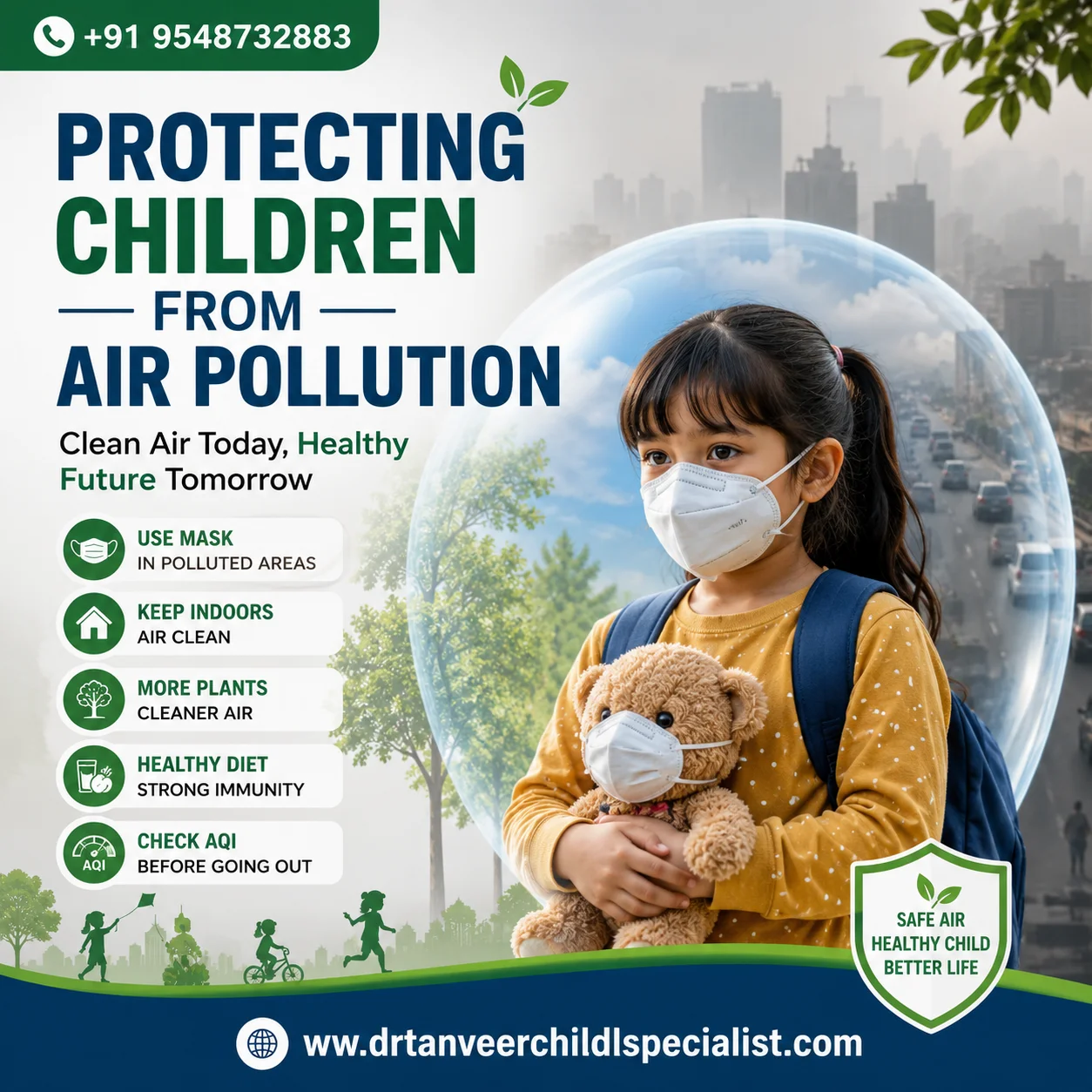
Children are more sensitive to polluted air. Their lungs are still developing. Their immune system is not fully mature. Because of this, even low levels of pollution can affect them.
Children also breathe faster than adults. This means they inhale more air in a short time. If the air is polluted, they take in more harmful particles.
Fine particles like PM2.5 go deep into the lungs. Some particles enter the bloodstream. This can affect breathing, immunity, and even brain development. That is why protecting children from air pollution should start early.
Common Sources of Air Pollution Around Children
Parents often think pollution comes only from outside. In reality, both indoor and outdoor sources matter.
Outdoor Sources
- Vehicle exhaust from cars and bikes
- Dust from construction sites
- Industrial smoke
- Burning garbage
Indoor Sources
- Cooking smoke in poorly ventilated kitchens
- Dust on furniture and carpets
- Use of incense sticks and room sprays
- Chemical cleaning products
Indoor pollution stays longer inside closed spaces. This makes it equally important to control. Protecting children from air pollution requires attention to both areas.
Understanding AQI for Daily Decisions
AQI means Air Quality Index. It shows how clean or polluted the air is. Parents should check AQI before planning outdoor activities.
| AQI Range | Condition | What Parents Should Do |
|---|---|---|
| 0–50 | Good | Safe for outdoor play |
| 51–100 | Moderate | Limit long outdoor exposure |
| 101–200 | Unhealthy | Use mask and reduce outdoor time |
| 201+ | Severe | Keep children indoors |
Checking AQI daily helps parents take simple decisions. This is one of the easiest ways of protecting children from air pollution.
How Pollution Affects Child Health
Breathing Problems
Polluted air irritates the airways. Children may develop cough or wheezing. Some may experience asthma symptoms.
Slow Lung Development
Continuous exposure affects lung growth. This can reduce lung capacity over time.
Weak Immunity
Children exposed to polluted air fall sick more often. Cold, throat infection, and fever become common.
If your child is also facing slow growth or frequent illness, you can read more about child not gaining weight causes and treatment.
Effect on Brain Development
Pollution may affect focus and learning ability. Some children show low concentration in school.
Daily Routine to Reduce Exposure
Parents do not need complex steps. Simple daily habits work best.
Morning Routine
Do not open windows early morning if traffic is high. Pollution levels are often higher during this time.
Outdoor Activity Planning
Plan outdoor play when AQI is low. Midday is usually safer compared to morning and evening.
After Coming Home
Ask children to wash hands and face. This removes dust and pollutants from skin.
These small steps help in protecting children from air pollution without major changes.
Indoor Protection Strategy
Indoor air quality can be controlled easily. This gives parents an advantage.
- Clean dust daily using a wet cloth
- Keep windows closed during high pollution hours
- Avoid smoking inside the house
- Use proper ventilation while cooking
Improving indoor air plays a major role in protecting children from air pollution.
Nutrition Support for Better Protection
Food helps the body fight pollution stress. A balanced diet improves immunity.
- Include fruits rich in vitamin C
- Add green vegetables in meals
- Give nuts in small quantity
For detailed guidance, you can explore child nutrition support.
Special Care for Babies and Toddlers
Newborns and toddlers are highly sensitive to polluted air. Their lungs are delicate. Even small exposure can cause discomfort. Protecting children from air pollution becomes more critical in the early years.
- Avoid taking babies outside when AQI is high
- Keep the room clean and dust-free
- Ensure proper ventilation without direct exposure to polluted air
- Do not use strong room sprays or incense near babies
For complete newborn care support, you can visit neonatal care services.
School-Going Children: Daily Exposure Control
School children face pollution daily. Travel, playground, and outdoor activities increase exposure. Parents need to prepare them.
- Keep a mask in the school bag during high pollution days
- Teach children to avoid outdoor play when air smells dusty or smoky
- Encourage hand and face washing after returning home
Regular monitoring helps track health changes. You can explore child health checkup services for routine care.
Season-Wise Pollution Awareness
Pollution levels change with seasons. Parents should adjust routines accordingly.
Winter Season
Smog levels increase. Air becomes heavy. Outdoor exposure should be limited.
Summer Season
Ozone levels may rise. Midday heat and pollution can irritate airways.
Rainy Season
Dust settles, but humidity may increase infections. Hygiene becomes important.
Understanding seasonal changes helps in protecting children from air pollution in a better way.
Travel and Commute Safety Tips
Children are exposed during daily travel. Small changes can reduce risk.
- Use car AC with windows closed in heavy traffic
- Avoid peak traffic hours when possible
- Choose less crowded routes for school travel
Even short exposure reduction helps in protecting children from air pollution over time.
Role of Vaccination in Pollution Protection
Pollution weakens immunity. This increases the chance of infections.
Following the vaccination schedule for babies helps protect children from respiratory infections.
You can also read more about importance of immunization.
Children Who Need Extra Attention
Some children are more sensitive to pollution exposure.
- Children with asthma
- Children with allergies
- Children with weak immunity
These children may show symptoms faster. Protecting children from air pollution becomes more important in such cases.
Warning Signs Parents Should Not Ignore
Parents should take early action if they notice:
- Continuous cough
- Breathing difficulty
- Frequent cold and infections
- Low energy or reduced activity
Early medical advice helps prevent complications.
Expert Pediatric Care in Roorkee
Dr. Tanveer Ahmad is an experienced Pediatrician practicing in Roorkee since 2018. He provides child healthcare services at Dr Hera Skin Hair & Children Hospital.
The clinic offers newborn care, vaccination, growth monitoring, nutrition counseling, and treatment of infections and allergies. The focus is on early diagnosis and personalized care for each child.
Learn more about the doctor: About Dr. Tanveer Ahmad
Explore all services: Child healthcare services
For consultation: Contact here
Address: Dr Hera Skin Hair & Children Hospital, Malviya Chowk, Near Bank of India, Roorkee, Uttarakhand – 247667
Phone: +91 9548732883
Map Location: View on Google Maps