
Starting school brings new routines, friendships, and learning experiences. It also makes preventive healthcare an important part of a child’s daily life. Parents often check school supplies and health records before a new academic year. Vaccination records deserve the same attention.
Vaccines for School-Age Children help protect children against infections that can cause serious illness. Some vaccines require booster doses as children grow. Others may be needed if an earlier dose was missed or the child has a specific health risk.
In India, vaccination recommendations depend on the child’s age, previous doses, health status, and the applicable immunization schedule. Parents can review their child’s vaccination card with a pediatrician to identify any pending doses.
Why Do School-Age Children Need Vaccines?
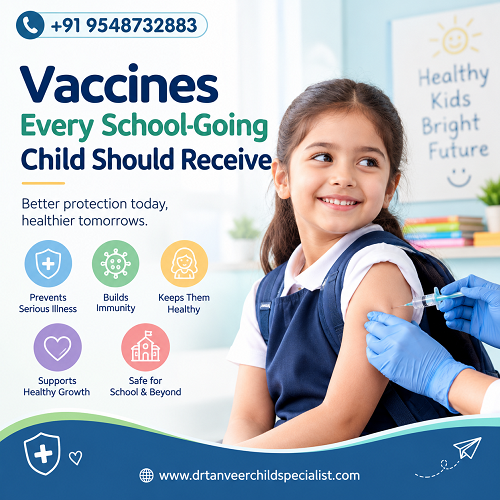
Vaccination remains important after infancy. Protection from some vaccines can decrease over time. Booster doses help maintain protection against diseases such as diphtheria, tetanus, and pertussis.
Children also interact closely with classmates, teachers, and other people. This creates opportunities for certain infections to spread. Vaccination helps reduce the risk of vaccine-preventable diseases and their complications.
Keeping vaccinations up to date is part of routine preventive healthcare. Regular child health checkups in Roorkee can also help parents discuss growth, nutrition, development, and age-appropriate preventive care.
Important Vaccines for School-Age Children by Age
The vaccination plan should follow the child’s documented immunization history. The following age groups highlight important vaccination checkpoints. They are not a substitute for an individualized schedule.
Vaccines for Children Aged 4–6 Years
Children in this age group may be due for important booster doses. Parents should check their vaccination card before assuming that all recommended doses are complete.
- DTP booster: The second booster against diphtheria, tetanus, and pertussis is recommended at 4–6 years under the Indian Academy of Pediatrics schedule.
- Polio booster: The IAP schedule recommends an IPV booster at 4–6 years. A pediatrician can verify the child’s previous doses and the appropriate formulation.
- Other missed doses: The doctor can review previous MMR, varicella, hepatitis A, and other age-appropriate vaccinations. The need for additional doses depends on the child’s history and applicable recommendations.
Parents should not rely on age alone to decide which vaccines are due. A child who has already received the recommended doses may not need the same vaccine again at this visit.
Vaccines for Children Aged 9–12 Years
The preteen years provide an important opportunity to review booster doses and adolescent vaccinations. A vaccination review at this stage can help identify gaps before the child moves into adolescence.
- Tdap booster: The IAP recommends a Tdap dose at 10–12 years. It helps maintain protection against tetanus, diphtheria, and pertussis.
- HPV vaccination: Human papillomavirus vaccination helps prevent HPV infections that can lead to certain cancers. Parents should discuss the appropriate age, dose schedule, and eligibility with their pediatrician.
- Catch-up vaccination: Children with incomplete records may need a personalized catch-up plan. The doctor should review earlier doses before recommending additional vaccinations.
HPV vaccination is a preventive measure, not a treatment for an existing infection. Parents can ask their pediatrician about the recommended schedule for their child’s age and health status.
Vaccines for Teenagers Aged 13–18 Years
Teenagers still need attention to their vaccination records. The doctor should check whether the recommended Tdap dose has been received and whether any earlier vaccinations remain incomplete.
HPV vaccination may also be due during adolescence. The recommended schedule depends on the age at the first dose and the child’s immune status. Under IAP recommendations, some children require a two-dose schedule, while older adolescents and immunocompromised children may require three doses.
Other vaccines may be recommended according to medical history, travel, exposure risks, and local guidance. A pediatrician can determine which vaccinations are appropriate rather than applying the same list to every teenager.
What If Your Child Has Missed a Vaccine?
Some children miss vaccinations because of illness, travel, changes in routine, or incomplete records. Parents may also discover missing doses when preparing for school admission. The next step is to review the child’s vaccination history with a pediatrician.
A missed vaccine does not automatically mean that the entire vaccination schedule must start again. The doctor will check the child’s age, previous doses, and the minimum intervals between doses. This helps determine an appropriate catch-up plan.
Keep the available vaccination card, discharge papers, and previous medical records together. If the records are incomplete, explain this during the consultation. Avoid giving extra doses without professional guidance.
Parents can also review the complete vaccination schedule in India to understand how immunization begins in infancy and continues as children grow. For an individualized plan, consult a pediatrician rather than relying on a general online schedule.
Common Vaccine Side Effects in Children
Vaccines can cause mild, temporary reactions. These may include pain, redness, or swelling at the injection site. Some children develop a mild fever or feel tired for a short time.
Most mild reactions settle without specific treatment. Parents should follow the advice provided by the healthcare professional. Do not give medicines to prevent vaccine reactions unless the doctor recommends them.
Seek urgent medical attention if your child develops difficulty breathing, swelling of the face or throat, collapse, or other signs of a severe allergic reaction. Report any concerning symptoms to the healthcare provider.
Tell the doctor about previous serious vaccine reactions, known allergies, immune system problems, and ongoing medical treatment before vaccination. These details help the doctor assess precautions and select an appropriate plan.
How to Prepare Your Child for a Vaccination Visit
A little preparation can make the appointment easier for both parents and children. Bring the vaccination card and any relevant medical records. Tell the doctor about recent illnesses and previous reactions to vaccines.
Explain the procedure to your child in simple, reassuring language. Avoid making threats or promising that the injection will not hurt. Comfort and honest communication can help reduce anxiety.
After vaccination, follow the clinic’s instructions about observation and aftercare. Ask when the next dose is due and make a note of the date. Store the updated vaccination record safely so it remains available for future consultations and school documentation.
Frequently Asked Questions About Vaccines for School-Age Children
Which vaccines are important for school-age children?
Important vaccination checkpoints include age-appropriate DTP boosters, polio boosters, Tdap, and HPV vaccination. Other vaccines may be needed based on earlier doses, health conditions, and individual risk. A pediatrician can confirm the vaccines due for your child.
Does a child need booster shots after starting school?
Yes, some vaccines require booster doses during childhood or adolescence. For example, the IAP schedule recommends a DTP second booster at 4–6 years and a Tdap dose at 10–12 years. The doctor should check previous doses before recommending vaccination.
What should parents do if the vaccination card is lost?
Contact the clinic or healthcare facility where the earlier vaccines were administered, if possible. Previous records may help establish which doses the child has received. If the history remains uncertain, consult a pediatrician for a safe vaccination plan.
Can a child receive vaccines during a mild illness?
A mild illness does not always require vaccination to be postponed. However, moderate or severe illness may affect the timing of certain vaccines. Inform the doctor about the child’s symptoms so the decision can be made after assessment.
Why should parents review vaccination records during adolescence?
Adolescence is an opportunity to check booster doses and vaccines such as HPV. Reviewing the records helps identify missed vaccinations and allows the doctor to recommend the appropriate schedule for the child’s age and health status.
Consult a Pediatrician for Your Child’s Vaccination Needs in Roorkee
Vaccination is an important part of preventive child healthcare. Parents should review their child’s records at the recommended ages instead of waiting until a school requests documentation. Timely consultation can help identify due boosters and missed doses.
Dr. Tanveer Ahmad has been practising as a pediatrician at Dr Hera Skin Hair & Children Hospital in Roorkee since 2018. The clinic provides child healthcare services that include vaccination, newborn care, routine health checkups, growth monitoring, nutrition counselling, and treatment of common childhood illnesses.
During a consultation, parents can discuss their child’s vaccination history, previous reactions, and any concerns about upcoming doses. The doctor can assess the child’s needs and explain the recommended next steps.
Learn more about Dr. Tanveer Ahmad or explore the clinic’s pediatric healthcare services.
Clinic Details
Dr Hera Skin Hair & Children Hospital Malviya Chowk, Near Bank of India Roorkee, Uttarakhand – 247667, India
Phone: +91 9548732883 Location: View clinic on Google Maps
For appointment information, visit the clinic contact page.