
Many parents look forward to the day their baby takes the first independent steps.
Some babies begin walking around their first birthday. Others need several more months to develop the balance, strength, and coordination required to walk without support. So, when do babies start walking, and when should parents seek advice about delayed walking?
Most babies take their first independent steps around 12 months of age. According to the CDC, taking a few steps independently is a milestone most children reach by 15 months.
Walking without holding on to anyone or anything is a milestone most children reach by 18 months. These ages are useful developmental guides, not strict deadlines for every child.
The important thing is to look at your baby’s overall progress. Standing, moving between supported positions, and gradually developing balance can all provide clues about walking readiness. Parents should also pay attention to difficulties with movement and any loss of skills their child has already learned.
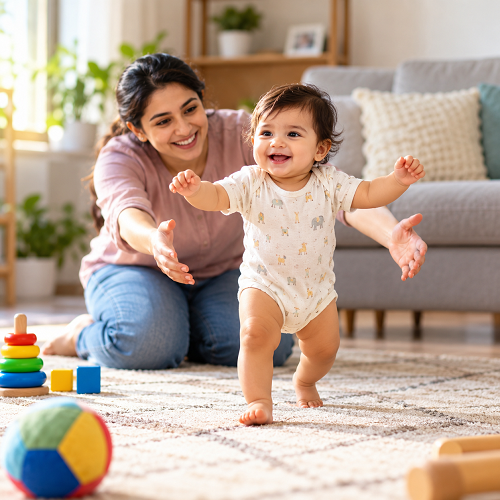
When Do Babies Start Walking Independently?
Independent walking develops gradually. A baby usually needs time to strengthen the muscles in the legs and trunk, improve balance, and learn how to shift weight from one foot to the other. The first steps may look unsteady. Your baby might take two or three steps before sitting down or reaching for support.
During this stage, falling onto the bottom is common. Babies often practice standing, taking a few steps, and lowering themselves back to the floor many times before walking becomes more consistent. A child who has only recently started walking may still need a hand when moving across uneven surfaces or changing direction.
Not every baby follows the same sequence. Some crawl before pulling themselves up to stand. Others move around by bottom-shuffling or using another movement pattern. Crawling is not a mandatory step that every baby must complete before walking.
If your baby is approaching 15 months and has not started taking independent steps, discuss their development with a pediatrician. By 18 months, most children walk without holding on. A baby who is not doing this should receive a developmental assessment rather than being expected to catch up without support.
Baby Walking Milestones: What Happens Before the First Steps?
Walking is not a single event. It develops through several smaller skills that help a baby move from sitting to standing and eventually take steps alone. The timing varies, so use the following stages as a general guide rather than a checklist your baby must follow exactly.
Building strength and learning to move
During early infancy, babies gradually develop head control, trunk stability, and the ability to sit with less support. As they grow, many begin moving across the floor by rolling, crawling, or using other methods. These activities give them opportunities to practice coordination and explore their surroundings.
Parents can encourage movement by offering supervised floor play in a safe space. Place an age-appropriate toy within reach to invite your baby to move towards it. There is no need to push a baby into standing or walking before they are ready.
Pulling up to stand
Many babies begin pulling themselves up by holding a stable sofa or another secure surface. This helps them practice bearing weight through their legs and controlling their body while upright. They may initially need both hands for support and later begin using one hand as their balance improves.
Make sure furniture cannot tip over. Keep sharp edges, hot drinks, dangling cords, and other hazards away from your baby’s reach. A surface that looks sturdy to an adult may still be unsafe if a baby pulls hard on it.
Moving sideways while holding furniture
Some babies begin taking sideways steps along a sofa or other stable furniture. This is often called cruising. It gives them practice moving their feet while keeping one or both hands on a support. Over time, some babies begin letting go briefly, standing without help, or reaching between nearby supports.
Progress may happen in short bursts. Your baby might cruise confidently one day and prefer crawling the next. This variation does not automatically indicate a problem, but persistent difficulty with standing or movement deserves attention.
Taking the first independent steps
Early independent steps may involve a wide stance, bent knees, raised arms, and frequent pauses. Babies use these movements while learning to keep their balance. As their coordination improves, they usually become more comfortable starting, stopping, and walking towards a familiar person or toy.
There is no need to make your baby walk for a particular distance or repeat steps for practice. Allow time for safe, self-directed movement. If your baby seems unable to bear weight, consistently uses one side differently, or loses a skill they previously had, contact a healthcare professional.
Parents who want to understand the wider picture can review these child growth milestones by age. Looking at development across several skills can be more informative than judging progress by walking alone.
Signs Your Baby Is Getting Ready to Walk
Your baby may show several signs of walking readiness before taking independent steps. These signs reflect developing strength, balance, and coordination. However, every baby progresses differently, so one missing sign does not automatically mean a developmental problem.
- Pulling up to stand: Your baby uses a stable surface to move from sitting or kneeling into a standing position.
- Standing with support: Your baby can remain upright while holding furniture or an adult’s hands.
- Cruising along furniture: Your baby takes sideways steps while holding a sofa or another stable surface.
- Briefly standing without support: Your baby lets go for a moment while trying to maintain balance.
- Taking steps towards a person or toy: Your baby attempts to move forward without holding on.
These behaviors can help parents recognize progress, but they are not a test that predicts the exact date a baby will walk. If you have concerns about your child’s movement or overall development, discuss them during a pediatric consultation.
How to Help Your Baby Learn to Walk Safely?
Babies learn through repeated opportunities to move, explore, and practice new skills. You do not need special equipment or a strict daily walking routine. A safe environment and patient encouragement are often more useful than trying to make your baby walk sooner.
Give your baby time for floor play
Provide supervised play on a firm, comfortable surface. Place a favourite toy a short distance away so your baby has a reason to reach, crawl, or move towards it. Allow your child to choose how to move rather than repeatedly positioning them on their feet.
Encourage movement without pulling your baby forward
Sit a short distance away and invite your baby to come towards you. When your child begins standing or cruising, keep a secure support nearby. Avoid pulling both arms upwards or forcing repeated steps when your baby is tired or uncomfortable.
Make the walking area safer
Secure heavy furniture to the wall, block access to stairs, cover sharp edges, and keep electrical cords out of reach. Remove slippery rugs and small objects that could cause falls or choking. Stay close when your baby practices standing or moving around furniture.
Choose suitable footwear
When practising indoors on a clean, safe surface, barefoot movement can help babies feel the floor with their feet. Outdoors, choose well-fitting shoes that protect the feet and allow natural movement. Shoes should not be used to force a baby into walking before they are ready.
Avoid wheeled baby walkers
Wheeled baby walkers can move quickly and allow children to reach stairs, hot surfaces, or other hazards. They do not teach babies to walk independently and may increase the risk of serious injuries. A clear floor area with close adult supervision is a safer choice.
Why Is My Baby Not Walking Yet?
Parents may become concerned when other babies of a similar age are already walking. However, differences in the timing of first steps are common. Some children take longer to develop the balance and coordination needed for independent walking.
Premature babies may need their corrected age considered when developmental progress is assessed. Their medical history and progress across other milestones also matter. A pediatrician can help determine whether your baby’s development follows an expected pattern or needs further evaluation.
Delayed walking can sometimes be associated with developmental, neurological, muscular, or orthopedic concerns. It is not possible to identify the cause from walking age alone. Avoid assuming that a baby is simply lazy or that extra walking practice will solve the problem.
If your child also has difficulty sitting, standing, bearing weight, or using both sides of the body, share these observations with a healthcare professional. Parents who have concerns about physical development can learn more about a child development clinic in Roorkee and the role of developmental assessment.
When Should You Worry About Late Walking?
Age-based milestones help parents recognize when a child may need additional support. The CDC lists taking a few independent steps as a milestone by 15 months and walking without holding on as a milestone by 18 months.
If your baby has not taken independent steps by 15 months, discuss their progress with a pediatrician, particularly if you have noticed other developmental concerns. If your child is not walking independently by 18 months, arrange a developmental assessment rather than waiting indefinitely.
Seek medical advice sooner if your baby has persistent difficulty standing, appears unusually stiff or floppy, consistently favours one side, or cannot bear weight as expected. A loss of previously acquired skills needs prompt medical assessment at any age.
During the appointment, explain what your child can do, when you first noticed the difficulty, and whether their movement has changed. Mention any concerns about feeding, growth, communication, or other developmental skills. This information can help the doctor decide what assessment or follow-up is appropriate.
Regular baby health checkups in Roorkee provide an opportunity to discuss growth, movement, nutrition, and developmental milestones. An individual assessment is more useful than comparing your baby’s progress with another child’s timeline.
Frequently Asked Questions About Baby Walking
Can a baby start walking at 9 months?
Some babies begin taking early steps before their first birthday. However, walking at 9 months is not a requirement for healthy development. Look at your baby’s overall progress and discuss any concerns with a pediatrician.
Is it normal for a 12-month-old baby not to walk?
Yes. Many babies are still cruising, standing with support, or practising balance at 12 months. The CDC identifies a few independent steps by 15 months and walking without support by 18 months as relevant milestones.
Is it normal for a baby to walk before crawling?
Yes. Some babies use alternative movement patterns and do not crawl on their hands and knees before walking. Crawling is not essential for every child. However, concerns about unusual movement or other delayed milestones should be discussed with a healthcare professional.
Do baby walkers help babies walk faster?
No. Wheeled baby walkers do not teach independent walking and can cause serious injuries. Supervised floor play and opportunities to move around a safe environment are better options.
Should babies wear shoes when learning to walk?
Barefoot practice on a clean, safe indoor surface can help babies feel the ground. Outdoors, suitable shoes protect their feet. Shoes should fit comfortably and should not restrict natural movement.
Does early walking mean a baby is more intelligent?
Early walking does not establish that a baby is more intelligent or will perform better academically. Walking is one part of physical development. Language, social interaction, learning, and other skills should also be considered.
What should I do if my baby is 18 months old and not walking?
Arrange an assessment with a pediatrician. The doctor can review your child’s developmental history, movement, muscle tone, and other milestones. Seek advice earlier if you notice additional concerns or a loss of previously acquired skills.
Supporting Your Child’s Development with Dr. Tanveer Ahmad
Dr. Tanveer Ahmad is a pediatrician practising in Roorkee since 2018 at Dr Hera Skin Hair & Children Hospital. His clinical practice includes newborn care, vaccination, routine health checkups, growth and development monitoring, nutrition counselling, and the assessment and treatment of common childhood illnesses.
Parents concerned about walking milestones can discuss their child’s movement, standing ability, balance, and broader developmental progress with a pediatrician. The aim is to understand the child’s individual needs and identify when further assessment may be helpful.
For information about the doctor’s background, visit the Dr. Tanveer Ahmad profile. Details about available pediatric healthcare services are also available online.
Clinic Details
Dr. Tanveer Ahmad – Pediatrician in Roorkee
Dr Hera Skin Hair & Children Hospital
Malviya Chowk, Near Bank of India, Roorkee, Uttarakhand – 247667, India
Phone: +91 9548732883
View clinic location on Google Maps
For appointment inquiries, parents can use the hospital’s contact page.