
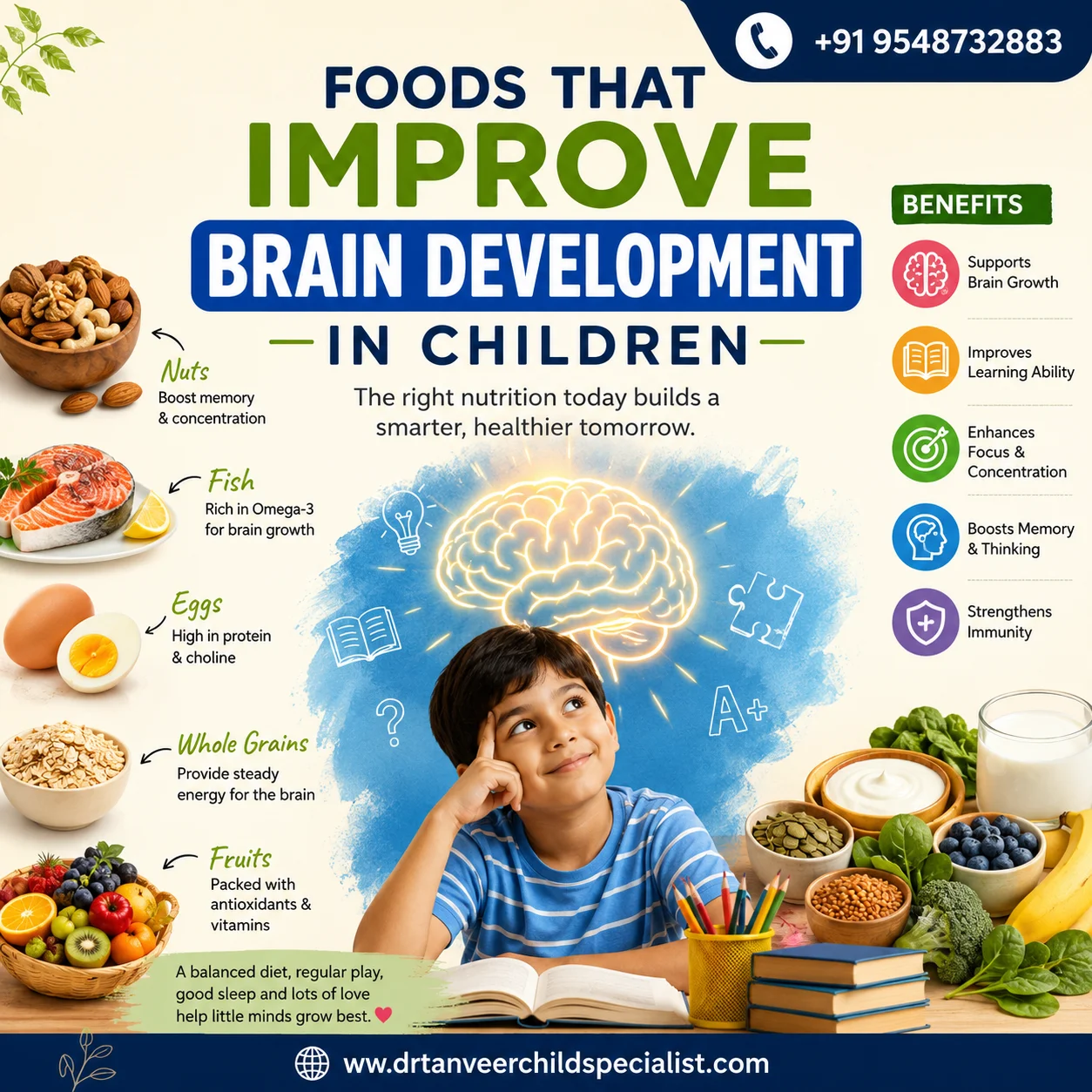
Good nutrition plays an important role in a child’s brain development. The brain grows rapidly during infancy and early childhood. It continues to develop through the teenage years. During this time, children need a balanced diet that provides the right nutrients to support learning, memory, focus, and healthy growth.
Foods for Brain Development in Children are not expensive or difficult to include in daily meals. Many everyday foods like eggs, fish, milk, nuts, seeds, fruits, vegetables, and whole grains provide nutrients that support healthy brain function. A varied diet also helps children stay active, improve concentration, and perform better in school.
This guide explains which nutrients matter the most, the best foods to include, practical meal ideas, and when parents should seek professional advice if they have concerns about their child’s nutrition or development.
Nutrition for Brain Development
A child’s brain develops quickly during the first five years of life. New brain connections are formed every day. These connections support language, memory, attention, emotional development, and problem-solving skills.
Good nutrition provides the building blocks that help these brain cells grow and communicate efficiently. On the other hand, poor nutrition may affect learning, energy levels, and overall development.
Parents often search for Foods for Brain Development in Children because they want to support healthy growth naturally. While no single food can increase intelligence on its own, a balanced diet rich in essential nutrients helps the brain function at its best.
Healthy eating works even better when combined with adequate sleep, physical activity, regular play, reading habits, and positive family interaction.
Key Nutrients That Support a Child’s Brain
Instead of focusing on one “superfood,” it is more helpful to understand the nutrients that support healthy brain development. Different nutrients perform different functions, and children need a combination of them every day.
Omega-3 Fatty Acids (DHA)
DHA is one of the most important fats found in the brain. It supports normal brain structure and helps nerve cells communicate effectively.
Good food sources include:
- Salmon
- Sardines
- Mackerel
- Walnuts
- Flaxseeds
- Chia seeds
Protein
Protein helps build brain tissue and supports the production of neurotransmitters. These chemical messengers allow brain cells to communicate with each other.
Healthy protein sources include:
- Eggs
- Milk
- Curd
- Paneer
- Dal
- Beans
- Chicken
- Fish
Iron
Iron helps carry oxygen to the brain. Low iron levels may affect attention, learning, and energy.
Foods rich in iron include:
- Spinach
- Lentils
- Beans
- Lean meat
- Jaggery in moderation
Vitamin C-rich foods such as oranges, guava, and amla can improve iron absorption when eaten with meals.
Choline
Choline supports memory and healthy brain cell development. It also plays a role in learning.
Good sources include:
- Egg yolk
- Chicken
- Soybeans
- Milk
- Peanuts
Zinc and Iodine
Zinc supports brain signalling and immune health. Iodine is essential for normal brain development, especially during early childhood.
Children can obtain these nutrients from dairy products, seafood, beans, nuts, seeds, whole grains, and iodized salt used in home-cooked meals.
B Vitamins
B-complex vitamins help convert food into energy for the brain. They also support healthy nerve function.
Good sources include:
- Whole grains
- Eggs
- Milk
- Leafy vegetables
- Legumes
Can One Food Make a Child Smarter?
No single food can improve intelligence on its own. Children benefit from eating a balanced variety of nutritious foods every day. Healthy eating supports normal brain growth, but learning also depends on sleep, emotional well-being, physical activity, reading, play, and a stimulating home environment.
This is why experts recommend including different Foods for Brain Development in Children instead of relying on supplements or so-called “brain boosting” products without medical advice.
Healthy Eating Works Best With Regular Growth Monitoring
Parents should monitor both nutrition and developmental milestones as their child grows. If a child has poor appetite, slow weight gain, feeding difficulties, or delayed developmental milestones, a pediatric evaluation is important.
You can also learn more about Infant and Child Nutrition and understand how proper nutrition supports healthy growth. Parents may also find it helpful to review Child Growth Milestones by Age to understand expected developmental progress.
10 Best Foods for Brain Development in Children
Parents often ask which foods should be included in daily meals to support healthy brain function. The answer is not one magical ingredient. A combination of nutrient-rich foods works best. These Foods for Brain Development in Children provide essential vitamins, minerals, healthy fats, and proteins that help support learning, memory, and concentration.
1. Eggs
Eggs are among the best foods for a growing brain. They provide high-quality protein and choline, a nutrient that supports memory and brain cell development. They also contain vitamin B12 and healthy fats.
Children can enjoy boiled eggs, omelets, egg bhurji, or egg sandwiches as part of a balanced diet.
2. Fatty Fish
Fish such as salmon, sardines, and mackerel are rich in DHA and omega-3 fatty acids. These nutrients help support normal brain development and healthy nerve function.
If your child does not eat fish, speak with a pediatrician before considering supplements.
3. Milk, Curd, and Paneer
Dairy products provide protein, calcium, iodine, and vitamin B12. They support overall growth while contributing to healthy brain function.
Unsweetened curd with fresh fruit makes a healthy snack for school-going children.
4. Nuts and Seeds
Walnuts, almonds, flaxseeds, pumpkin seeds, and chia seeds provide healthy fats, vitamin E, zinc, and plant-based omega-3 fats.
Whole nuts may not be suitable for younger children because of the choking risk. Nut powders or finely ground seeds can be mixed into porridge, yogurt, or homemade smoothies.
5. Green Leafy Vegetables
Spinach, fenugreek leaves, mustard greens, and other leafy vegetables provide iron, folate, vitamin K, and antioxidants.
These nutrients support healthy blood circulation and normal brain function.
6. Colorful Fruits
Blueberries, oranges, apples, bananas, guava, berries, and pomegranate provide antioxidants and vitamin C. These nutrients help protect brain cells from oxidative stress.
Seasonal fruits are often the freshest and easiest choice for daily meals.
7. Whole Grains
Oats, brown rice, whole wheat, millets, and quinoa release energy gradually. This steady energy supply helps children stay active and focused during school hours.
Replacing refined grains with whole grains is a simple way to improve daily nutrition.
8. Lentils and Beans
Dal, chickpeas, kidney beans, soybeans, and black gram provide protein, iron, zinc, and fibre.
These foods are excellent vegetarian options for families looking to include more Foods for Brain Development in Children in everyday meals.
9. Avocado
Avocado contains healthy fats and vitamin E. It can be mashed into sandwiches, wraps, or homemade spreads for older children.
If avocado is not easily available, nuts and seeds remain excellent alternatives.
10. Peanut Butter (Without Added Sugar)
Natural peanut butter provides protein and healthy fats. Spread it on whole-grain bread or serve it with apple slices for a balanced snack.
Children with peanut allergy should completely avoid peanuts and use alternatives recommended by their doctor.
Simple Indian Meal Ideas That Support Brain Health
Healthy eating does not require expensive ingredients. Everyday Indian meals can provide excellent nutrition when they include a variety of foods.
- Vegetable poha with peanuts and milk.
- Stuffed paneer paratha with curd.
- Idli with sambar and coconut chutney.
- Vegetable dal khichdi with curd.
- Egg bhurji with whole wheat roti.
- Grilled fish with rice and vegetables.
- Fruit bowl with unsweetened yogurt.
Offering different foods during the week helps children receive a wider range of nutrients instead of depending on one particular food.
Foods to Limit for Better Brain Health
Healthy brain development is not only about adding nutritious foods. It also involves reducing foods that provide excess sugar, unhealthy fats, and very little nutritional value.
Try to limit:
- Sugary drinks.
- Packaged sweets.
- Highly processed snacks.
- Deep-fried fast foods.
- Excess packaged bakery products.
These foods can replace healthier meal choices and may reduce the overall quality of a child’s diet when eaten too often.
If your child has poor appetite, selective eating habits, or difficulty gaining healthy weight, read our guide on why some children are not gaining weight. Understanding the underlying cause is important before making major dietary changes.
Tips to Help Children Eat Brain-Healthy Foods
Even the healthiest foods will not benefit a child if they are rarely eaten. Many parents struggle with picky eating, especially during the preschool years. The goal is to make nutritious foods a regular part of family meals without forcing children to eat.
- Offer a variety of foods instead of serving the same meal every day.
- Include one new food with familiar favourites.
- Maintain regular meal and snack timings.
- Keep children hydrated with water throughout the day.
- Avoid giving sugary snacks before meals.
- Let children help wash vegetables or arrange fruits on a plate.
- Be patient. Some children need multiple exposures before accepting a new food.
Parents looking for Foods for Brain Development in Children should remember that consistency matters more than perfection. A balanced diet followed over months and years supports healthy growth better than occasional “superfoods.”
Lifestyle Habits That Support Brain Development
Nutrition is only one part of healthy brain development. Daily habits also influence learning, attention, memory, and emotional well-being.
Encourage your child to:
- Get enough sleep according to their age.
- Play outdoors every day.
- Read books and listen to stories.
- Take part in creative activities such as drawing or music.
- Limit recreational screen time.
- Spend time talking and interacting with family members.
These healthy habits, along with Foods for Brain Development in Children, create an environment that supports overall cognitive and physical development.
When Should Parents Consult a Pediatrician?
Every child develops at their own pace. However, some signs should not be ignored. Speak with a pediatrician if your child:
- Has a poor appetite for a prolonged period.
- Shows slow weight gain or growth.
- Frequently skips meals.
- Has feeding or swallowing difficulties.
- Appears tired or less active than usual.
- Misses expected developmental milestones.
Regular health check-ups help identify nutritional concerns early. Parents can also learn more about Baby Health Checkups in Roorkee and the Child Development Clinic for developmental assessment and nutritional guidance whenever required.
Frequently Asked Questions
Which food is best for brain development in children?
There is no single best food. Eggs, fatty fish, milk, curd, nuts, seeds, fruits, vegetables, whole grains, and lentils all provide important nutrients that support healthy brain development.
Do brain-boosting foods increase IQ?
No food can directly increase a child’s IQ. A balanced diet supports normal brain function, while learning, sleep, physical activity, and a stimulating home environment all contribute to healthy cognitive development.
Are vegetarian foods enough for healthy brain development?
Yes. A well-planned vegetarian diet can provide most essential nutrients through dairy products, legumes, whole grains, nuts, seeds, fruits, and vegetables. Some children may need additional supplementation only if recommended by a pediatrician.
Should children take brain supplements?
Healthy children usually receive the nutrients they need from a balanced diet. Supplements should only be given after medical advice, especially if a nutritional deficiency is suspected.
How can I improve my child’s concentration naturally?
A nutritious diet, regular sleep, physical activity, reading, active play, and limited screen time all help improve attention and concentration. Building these habits consistently is more effective than relying on any single food.
Conclusion
Choosing the right Foods for Brain Development in Children is one of the simplest ways parents can support healthy growth. Everyday foods such as eggs, dairy products, fish, lentils, whole grains, fruits, vegetables, nuts, and seeds provide the nutrients that a developing brain needs. Combining these foods with adequate sleep, active play, and regular learning activities creates a strong foundation for your child’s overall development.
If you have concerns about your child’s eating habits, growth, or developmental progress, seek guidance from an experienced pediatrician.
Dr. Tanveer Ahmad, Pediatrician at Dr Hera Skin Hair & Children Hospital, provides comprehensive care for children’s nutrition, growth, development, and preventive healthcare. You can also contact the clinic to schedule a consultation for personalized advice based on your child’s individual needs.