
The rainy season brings relief from the summer heat, but it also increases the risk of infections in children. Changes in temperature, high humidity, stagnant water, and contaminated food or drinking water create the perfect environment for many illnesses. Young children are more vulnerable because their immune system is still developing, and they spend more time in schools, playgrounds, and daycare settings where infections can spread easily.
Understanding Monsoon Diseases in Kids helps parents recognize symptoms early and take practical steps to protect their children. Early medical attention, good hygiene, timely vaccination, and proper nutrition can reduce the risk of serious complications.
At Dr. Tanveer Ahmad, Pediatrician at Dr Hera Skin Hair & Children Hospital, Roorkee, child healthcare focuses on early diagnosis, preventive care, growth monitoring, vaccination, nutrition, and personalized treatment. Since 2018, Dr. Tanveer Ahmad has been caring for newborns, infants, children, and adolescents while helping parents make informed healthcare decisions throughout every stage of childhood.
Why Do Monsoon Diseases in Kids Increase During the Rainy Season?
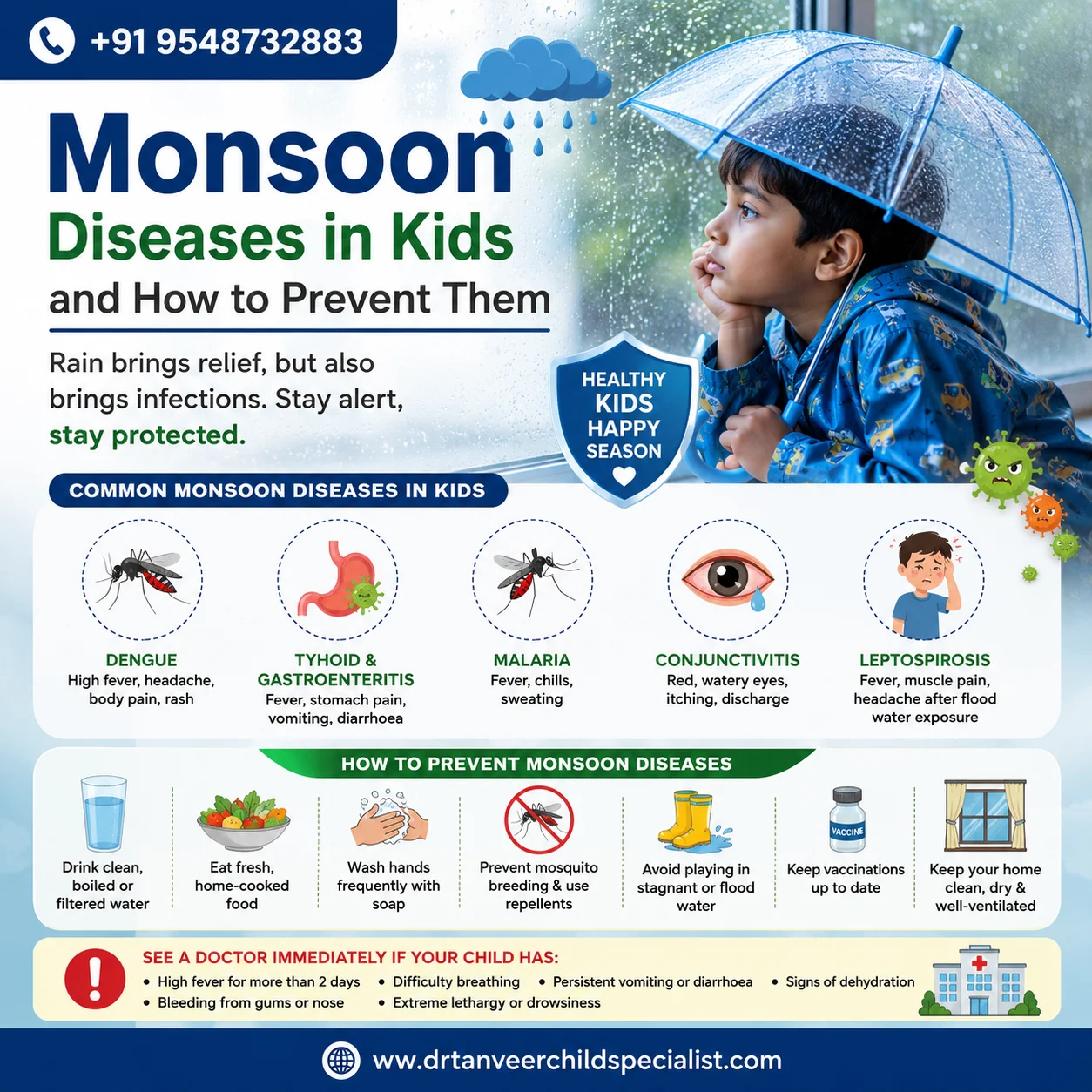
Children naturally explore their surroundings. They often play outdoors, touch shared surfaces, and forget to wash their hands. During the monsoon, these everyday activities can increase exposure to germs.
Several factors contribute to the rise of Monsoon Diseases in Kids.
- Stagnant water becomes a breeding ground for mosquitoes.
- Rainwater can contaminate drinking water sources.
- High humidity supports the growth of bacteria, viruses, and fungi.
- Wet clothes and shoes remain damp for long periods.
- Children spend more time in crowded indoor environments.
- Food spoils faster because of increased moisture.
- Poor hand hygiene allows infections to spread easily.
These conditions increase the chances of mosquito-borne, waterborne, foodborne, and viral infections. Parents should pay close attention to early symptoms instead of waiting for the illness to worsen.
Most Common Monsoon Diseases in Kids
Different infections become more common during the rainy season. Some are mild, while others require immediate medical care.
| Disease | Main Cause | Common Symptoms | Prevention |
|---|---|---|---|
| Dengue | Mosquito bite | High fever, rash, body pain | Avoid mosquito breeding and bites |
| Malaria | Mosquito bite | Fever with chills and sweating | Mosquito protection |
| Typhoid | Contaminated food or water | Persistent fever, stomach pain | Safe food and clean water |
| Viral Fever | Seasonal viral infection | Fever, cough, weakness | Hand hygiene and rest |
| Gastroenteritis | Virus or contaminated food | Vomiting and diarrhoea | Food hygiene |
| Conjunctivitis | Viral or bacterial infection | Red, watery eyes | Avoid sharing towels |
| Leptospirosis | Floodwater contamination | Fever, muscle pain | Avoid dirty floodwater |
Dengue in Children
Dengue is one of the most common Monsoon Diseases in Kids. It spreads through the bite of an infected Aedes mosquito. These mosquitoes usually breed in clean, stagnant water found in coolers, flower pots, buckets, and water storage containers.
Common symptoms include:
- Sudden high fever
- Severe headache
- Pain behind the eyes
- Body and joint pain
- Skin rash
- Nausea or vomiting
- Loss of appetite
If a child develops bleeding from the nose or gums, persistent vomiting, unusual sleepiness, or severe abdominal pain, immediate medical evaluation is important.
Malaria in Children
Malaria spreads through the bite of infected Anopheles mosquitoes. It remains an important seasonal illness in many regions during and after heavy rainfall.
Symptoms often include:
- High fever
- Repeated chills
- Sweating
- Headache
- Weakness
- Poor appetite
Children with repeated fever episodes should be evaluated by a pediatrician instead of treating the fever repeatedly at home.
Typhoid and Other Waterborne Infections
Rainwater may contaminate drinking water and food supplies. This increases the risk of typhoid, gastroenteritis, and other intestinal infections.
Watch for symptoms such as:
- Persistent fever
- Vomiting
- Loose stools
- Abdominal pain
- Poor appetite
- Weakness
Children can become dehydrated quickly. Parents should encourage adequate fluid intake and seek medical care if vomiting or diarrhoea continues.
Maintaining a healthy diet also supports recovery and immunity. Parents can learn more about age-appropriate nutrition through this guide on Infant and Child Nutrition.
Seasonal Viral Fever in Children
Many viral infections become common during the rainy season. Viral fever usually spreads through respiratory droplets or close contact with infected individuals.
Common symptoms include:
- Fever
- Sore throat
- Runny nose
- Cough
- Body ache
- Fatigue
Although many viral illnesses improve with supportive care, prolonged fever or worsening symptoms should never be ignored.
Leptospirosis After Floodwater Exposure
Children sometimes play in puddles or floodwater after heavy rain. Floodwater may contain bacteria from contaminated soil or animal urine.
Possible symptoms include:
- Fever
- Headache
- Muscle pain
- Vomiting
- Red eyes
- Fatigue
If these symptoms develop after floodwater exposure, parents should inform the pediatrician about the exposure history. This information helps in timely evaluation and management.
Early Symptoms Parents Should Never Ignore
Not every fever becomes serious. However, some warning signs require prompt medical attention. Recognizing these symptoms early can help prevent complications associated with Monsoon Diseases in Kids.
| Symptom | Possible Concern |
|---|---|
| High fever with rash | Dengue or viral illness |
| Fever with chills | Malaria |
| Persistent vomiting | Dehydration risk |
| Loose stools | Waterborne infection |
| Red eyes | Conjunctivitis or viral infection |
| Severe abdominal pain | Requires immediate evaluation |
Signs of Dehydration in Children
Dehydration can develop quickly during vomiting, diarrhoea, or prolonged fever. Parents should monitor their child carefully.
- Dry lips and mouth
- Reduced urination
- Sunken eyes
- Extreme tiredness
- Irritability
- Crying without tears
- Dizziness
If dehydration signs appear, medical assessment should not be delayed. Regular child health checkups also help monitor overall health, growth, and recovery after seasonal illnesses.
How to Prevent Monsoon Diseases in Kids?
Many Monsoon Diseases in Kids can be prevented with simple daily habits. Small changes at home and school can reduce the risk of infection throughout the rainy season.
1. Protect Children from Mosquito Bites
Mosquito control should begin at home. Even clean, stagnant water can become a breeding place for mosquitoes.
- Empty coolers, buckets, flower pots, and trays regularly.
- Cover water storage containers properly.
- Dress children in full-sleeved clothing when possible.
- Use a child-safe mosquito repellent as advised by your pediatrician.
- Install mesh screens on doors and windows.
- Use mosquito nets for babies while sleeping.
2. Ensure Safe Food and Drinking Water
Contaminated food and water are common causes of seasonal stomach infections.
- Offer boiled or properly filtered drinking water.
- Prepare fresh meals at home.
- Avoid uncovered food from roadside vendors.
- Wash fruits and vegetables thoroughly before serving.
- Store cooked food safely and reheat it properly.
3. Encourage Proper Hand Hygiene
Handwashing is one of the simplest ways to reduce the spread of infections.
- Wash hands before every meal.
- Wash hands after using the toilet.
- Wash hands after outdoor play.
- Teach children to avoid touching their eyes, nose, and mouth with unwashed hands.
4. Avoid Floodwater and Dirty Puddles
Children often enjoy playing in rainwater. However, floodwater may carry harmful bacteria and other germs.
- Avoid walking barefoot in wet areas.
- Keep cuts and wounds covered.
- Change wet clothes immediately.
- Wash feet and hands after returning home.
Monsoon Diet for Kids
A healthy diet supports normal growth and helps the body fight seasonal infections. Fresh, balanced meals are a better choice than processed or stale food during the rainy season.
Foods to Include
- Fresh home-cooked meals
- Seasonal fruits that are washed properly
- Freshly prepared vegetable soups
- Dal, rice, and khichdi
- Curd, if suitable for your child
- Milk and other nutritious dairy products
- Protein-rich foods such as eggs, pulses, and paneer according to age
Foods to Limit
- Street food
- Uncovered snacks
- Cut fruits sold outdoors
- Carbonated drinks
- Food stored for long hours
Parents concerned about their child’s eating habits or nutritional intake can read our guide on Infant and Child Nutrition in Roorkee.
Age-wise Tips to Reduce Monsoon Diseases in Kids
Babies (0–12 Months)
- Maintain exclusive breastfeeding when appropriate.
- Keep feeding bottles clean and sterilized.
- Use mosquito nets during sleep.
- Do not expose babies to crowded places unnecessarily.
Toddlers
- Teach regular handwashing.
- Keep toys clean.
- Avoid puddle play.
- Change wet clothes immediately.
School-going Children
- Carry a clean water bottle.
- Pack fresh homemade lunch.
- Wear dry socks and shoes.
- Use a clean handkerchief or tissues.
- Inform teachers if the child develops fever during school hours.
Warning Signs That Need Immediate Medical Attention
Parents should not wait for symptoms to improve on their own if a child develops any of the following signs.
- Persistent high fever
- Difficulty breathing
- Repeated vomiting
- Severe diarrhoea
- Blood in vomit or stool
- Bleeding from the nose or gums
- Extreme sleepiness or confusion
- Reduced urine output
- Convulsions or seizures
- Severe abdominal pain
Early evaluation helps identify the cause and supports timely treatment before complications develop.
Home Care Tips During Mild Illness
Children with mild viral illnesses may recover with supportive care, but parents should continue to monitor symptoms closely.
- Encourage plenty of fluids.
- Offer light, freshly prepared meals.
- Allow adequate rest.
- Monitor body temperature.
- Follow your pediatrician’s advice before giving medicines.
- Do not give antibiotics without medical consultation.
If symptoms continue or become worse, schedule a medical consultation instead of delaying treatment.
Common Mistakes Parents Should Avoid
- Ignoring persistent fever.
- Giving leftover antibiotics.
- Stopping prescribed medicines too early.
- Allowing children to play in floodwater.
- Serving uncovered or stale food.
- Ignoring signs of dehydration.
- Skipping follow-up visits when advised.
Vaccination Plays an Important Role
Routine immunization helps protect children against several preventable diseases. Parents should ensure that their child’s vaccination schedule remains up to date throughout the year.
You can learn more by visiting our pages on Child Immunization and Vaccination and the Complete Vaccination Schedule for Babies in India.
Advice from Dr. Tanveer Ahmad
According to Dr. Tanveer Ahmad, Pediatrician practicing at Dr Hera Skin Hair & Children Hospital, Roorkee since 2018, prevention begins at home. Parents should never ignore persistent fever, repeated vomiting, poor fluid intake, or unusual sleepiness during the rainy season. Early medical assessment often helps identify infections before they become serious.
The hospital provides comprehensive child healthcare services, including newborn care, routine health checkups, vaccination, growth and development monitoring, nutrition counseling, treatment of childhood infections, allergies, digestive disorders, and preventive healthcare. The focus remains on timely diagnosis and personalized care for every child.
When Should You Visit a Pediatrician?
Seek medical advice if your child has:
- Fever lasting more than two days.
- Repeated vomiting or diarrhoea.
- Difficulty drinking fluids.
- Reduced activity or unusual drowsiness.
- Breathing difficulty.
- Skin rash with fever.
- Signs of dehydration.
- Poor appetite that continues for several days.
If your child experiences frequent illness, poor weight gain, or delayed growth along with seasonal infections, you may also find these resources helpful:
- Child Is Not Gaining Weight – Causes and Treatment
- Child Growth Milestones by Age
- Child Development Clinic
- Pediatric Services
Frequently Asked Questions
Which are the most common monsoon diseases in kids?
Dengue, malaria, viral fever, typhoid, gastroenteritis, conjunctivitis, and leptospirosis are among the common illnesses seen during the rainy season.
How can parents reduce the risk of monsoon infections?
Maintain good hygiene, provide safe food and drinking water, prevent mosquito breeding, keep vaccinations up to date, and seek medical care if symptoms persist.
Can children drink normal tap water during the rainy season?
Drinking water should be properly filtered or boiled if its safety is uncertain. Clean drinking water reduces the risk of waterborne infections.
Should every fever during monsoon be tested for dengue?
Not every fever is dengue. A pediatrician will recommend the appropriate evaluation based on your child’s symptoms, examination, and clinical history.
When should parents seek urgent medical care?
Immediate medical attention is needed if a child develops breathing difficulty, persistent vomiting, dehydration, severe abdominal pain, bleeding, seizures, or unusual drowsiness.
Conclusion
Monsoon Diseases in Kids can often be prevented through good hygiene, safe food and water, mosquito control, balanced nutrition, and timely medical care. Parents should monitor symptoms carefully and avoid delaying evaluation when warning signs appear. Early diagnosis supports faster recovery and helps reduce the risk of complications.
If you have concerns about your child’s health during the rainy season, schedule a consultation with Dr. Tanveer Ahmad at Dr Hera Skin Hair & Children Hospital, Malviya Chowk, Near Bank of India, Roorkee, Uttarakhand – 247667.
To book an appointment or discuss your child’s symptoms, please visit our Contact Page.