
The first two years of your baby’s life are crucial for healthy growth and immune system development. Following the right Vaccination Schedule for Babies helps protect infants from several serious infectious diseases before they are exposed to them. Vaccines prepare the body’s immune system to recognize and fight harmful bacteria and viruses safely.
In India, childhood vaccination follows the Universal Immunization Programme (UIP) by the Government of India. Many pediatricians also recommend additional vaccines based on the Indian Academy of Pediatrics (IAP) guidelines. Together, these recommendations provide broad protection during infancy and early childhood.
This guide explains the complete Vaccination Schedule for Babies in India, the purpose of each vaccine, the recommended timeline, and practical advice for parents. The information is designed to help you understand the schedule better. Always consult your pediatrician before making vaccination decisions for your child.
Expert Pediatric Guidance
Reviewed by Dr. Tanveer Ahmad – Pediatrician in Roorkee
Clinic: Dr Hera Skin Hair & Children Hospital, Malviya Chowk, Near Bank of India, Roorkee, Uttarakhand – 247667, India
Phone: +91 9548732883
Dr. Tanveer Ahmad has been practicing Pediatrics in Roorkee since 2018. He provides comprehensive child healthcare services including newborn care, vaccination, routine health checkups, growth and development monitoring, nutrition counseling, treatment of childhood infections, allergies, fever, digestive disorders, and preventive healthcare. His approach focuses on early diagnosis, personalized treatment, and supporting healthy child development from birth through adolescence.
If you wish to know more about the doctor, visit Dr. Tanveer Ahmad’s profile.
Why Following the Vaccination Schedule for Babies Is Important?
Babies are born with an immature immune system. During the first few months of life, they are more vulnerable to infections that can become serious if left untreated. Vaccines help the immune system recognize harmful organisms before natural exposure occurs.
Following the recommended Vaccination Schedule for Babies offers several important benefits.
- Provides protection before disease exposure.
- Reduces the risk of severe illness and complications.
- Supports healthy growth during infancy.
- Helps reduce the spread of vaccine-preventable diseases.
- Keeps your child’s immunization record complete.
Delaying scheduled vaccines may leave temporary gaps in protection. If a dose is missed, speak with your pediatrician about an appropriate catch-up vaccination plan.
Parents can also learn more about comprehensive child immunization and vaccination services available at our clinic.
Who Decides the Vaccination Schedule for Babies in India?
Two trusted medical authorities guide childhood immunization in India.
1. Universal Immunization Programme (UIP)
The Universal Immunization Programme is managed by the Government of India. It provides essential vaccines free of cost through government hospitals, Primary Health Centres (PHCs), Community Health Centres (CHCs), and selected healthcare facilities.
These vaccines protect children against several serious diseases including tuberculosis, polio, hepatitis B, diphtheria, tetanus, pertussis, measles, rubella, rotavirus infection, and others included in the national schedule.
2. Indian Academy of Pediatrics (IAP)
The Indian Academy of Pediatrics publishes additional vaccination recommendations based on scientific evidence and current disease trends. Many pediatricians recommend these vaccines depending on the child’s age, medical history, travel plans, and risk of exposure.
Optional vaccines may include Influenza, Hepatitis A, Varicella, Typhoid Conjugate Vaccine, and others that are not part of the routine government schedule.
UIP vs IAP Vaccination Schedule for Babies
| Feature | UIP | IAP |
|---|---|---|
| Managed By | Government of India | Indian Academy of Pediatrics |
| Availability | Government Health Centres | Private Pediatric Clinics |
| Cost | Free | Paid |
| Purpose | Essential childhood protection | Additional protection based on individual needs |
| Recommendation | National Immunization Programme | Evidence-based Pediatric Guidance |
Most pediatricians use the government schedule as the foundation while recommending additional vaccines after discussing the child’s individual healthcare needs with parents.
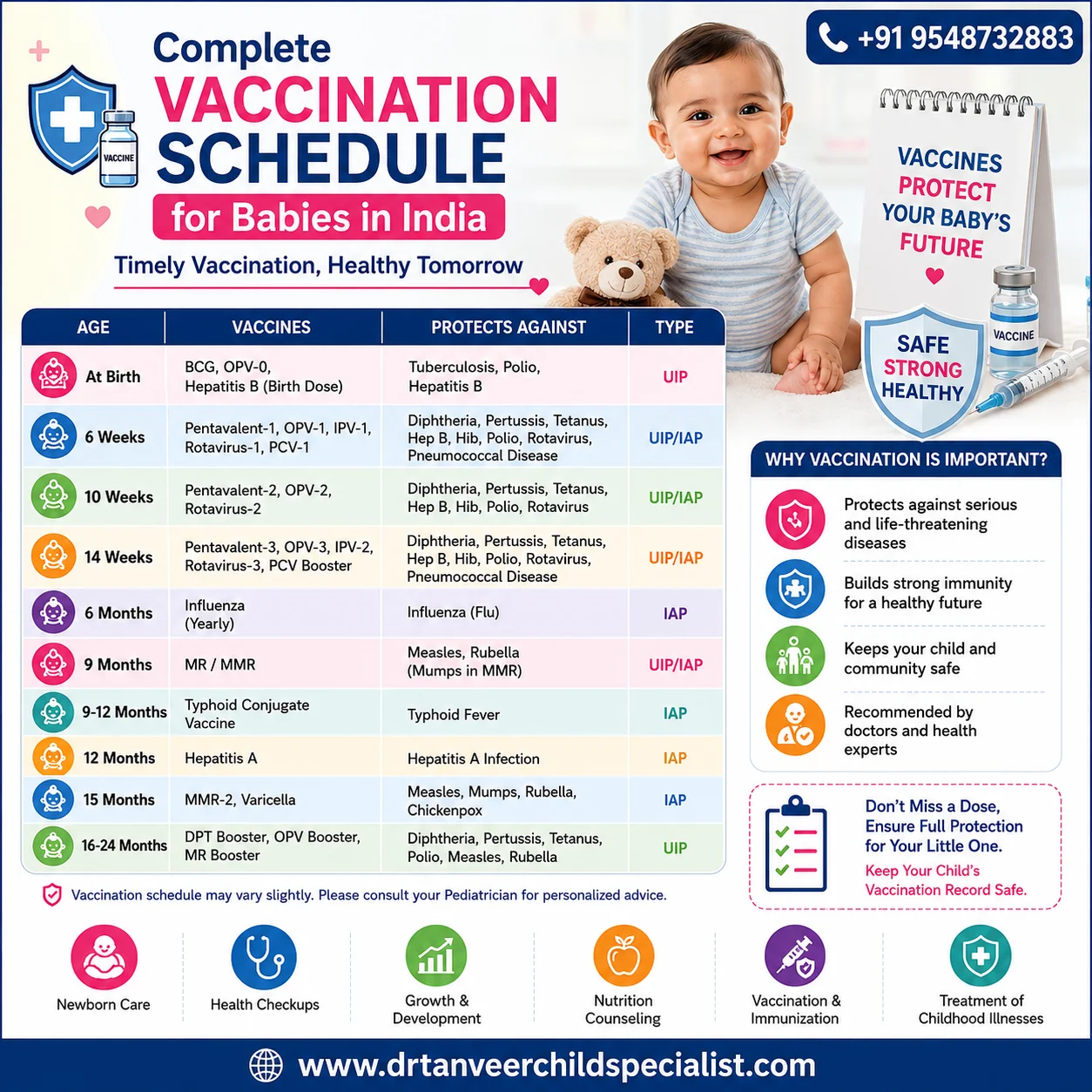
Complete Vaccination Schedule for Babies in India
The following table provides a simplified overview of the recommended Vaccination Schedule for Babies. The exact schedule may vary slightly depending on your pediatrician’s advice, your baby’s health condition, and regional recommendations.
| Baby’s Age | Recommended Vaccine | Protects Against | Category | Next Dose |
|---|---|---|---|---|
| At Birth | BCG, OPV-0, Hepatitis B | Tuberculosis, Polio, Hepatitis B | UIP | 6 Weeks |
| 6 Weeks | Pentavalent-1, OPV-1, IPV-1, Rotavirus-1, PCV-1 | Multiple Childhood Diseases | UIP/IAP | 10 Weeks |
| 10 Weeks | Pentavalent-2, OPV-2, Rotavirus-2 | Routine Infant Protection | UIP/IAP | 14 Weeks |
| 14 Weeks | Pentavalent-3, OPV-3, IPV-2, Rotavirus-3, PCV Booster | Continued Immunity | UIP/IAP | 9 Months |
| 6 Months | Influenza (Recommended) | Seasonal Flu | IAP | Annual |
| 9 Months | MR/MMR Vaccine | Measles & Rubella | UIP/IAP | 12-15 Months |
| 9-12 Months | Typhoid Conjugate Vaccine | Typhoid Fever | IAP | As Advised |
| 12 Months | Hepatitis A | Hepatitis A Infection | IAP | As Recommended |
| 15 Months | MMR-2, Varicella | Measles, Mumps, Rubella, Chickenpox | IAP | Booster if Required |
| 16-24 Months | DPT Booster, OPV Booster, MR Booster | Long-term Protection | UIP | Future Booster Schedule |
Important: Every child is unique. Premature babies, children with certain medical conditions, or those who have missed previous doses may require an individualized vaccination plan.
Understanding Each Vaccine in the Vaccination Schedule for Babies
The vaccination chart may appear complicated at first. Understanding why each vaccine is given makes it easier for parents to follow the schedule confidently.
In the next section, we will explain every important vaccine individually, including its purpose, ideal timing, diseases it helps prevent, common side effects, and what parents should expect after vaccination.
Regular follow-up visits also help monitor your baby’s overall growth and health. Our baby health checkup services support growth assessment, developmental monitoring, and preventive child healthcare alongside timely vaccination.
Vaccine-Wise Guide for Parents
Every vaccine included in the Vaccination Schedule for Babies has a specific purpose. Knowing why each vaccine is given helps parents stay informed and avoid unnecessary confusion.
BCG Vaccine
The BCG vaccine is usually given at birth. It helps protect babies from severe forms of tuberculosis (TB), especially TB meningitis and disseminated TB. It is one of the first vaccines included in the national immunization schedule.
OPV (Oral Polio Vaccine)
OPV protects children against poliomyelitis. Multiple doses are required because repeated exposure helps build strong immunity during infancy.
Hepatitis B Vaccine
The birth dose of Hepatitis B vaccine helps reduce the risk of infection that may occur during childbirth. Additional doses complete long-term protection.
Pentavalent Vaccine
This combination vaccine protects against five serious diseases:
- Diphtheria
- Pertussis (Whooping Cough)
- Tetanus
- Hepatitis B
- Haemophilus influenzae type b (Hib)
It reduces the number of injections while providing protection against multiple infections.
IPV (Inactivated Polio Vaccine)
IPV works alongside OPV to strengthen protection against polio. Pediatricians recommend completing all scheduled doses.
Rotavirus Vaccine
Rotavirus infection can cause severe diarrhea and dehydration in infants. Timely vaccination lowers the risk of serious illness and hospitalization.
PCV (Pneumococcal Conjugate Vaccine)
PCV helps protect babies from pneumonia, meningitis, bloodstream infections, and certain ear infections caused by pneumococcal bacteria.
MR/MMR Vaccine
This vaccine protects against measles and rubella. The MMR vaccine also includes protection against mumps.
Varicella Vaccine
Varicella vaccine helps prevent chickenpox and lowers the risk of related complications.
Influenza Vaccine
Annual influenza vaccination may be recommended for eligible children based on their age and your pediatrician’s advice.
What If Your Baby Misses a Vaccine?
Parents sometimes worry after missing a scheduled vaccine due to illness, travel, or family circumstances. Missing one appointment does not usually mean the vaccination series must start again.
Your pediatrician can prepare a catch-up vaccination schedule based on:
- Your baby’s current age.
- The vaccines already received.
- The time elapsed since the missed dose.
- Your child’s medical history.
Avoid delaying vaccination further without medical advice. Timely catch-up helps restore protection.
Government Vaccination vs Private Vaccination
| Government Vaccination (UIP) | Private Vaccination (IAP Recommendations) |
|---|---|
| Available free of cost. | Paid vaccination services. |
| Available at Government Hospitals and PHCs. | Available at Pediatric Clinics and Hospitals. |
| Covers essential childhood vaccines. | May include additional recommended vaccines. |
| Follows National Immunization Schedule. | Individualized according to pediatric advice. |
Many families complete the government schedule and discuss optional vaccines with their pediatrician based on their child’s individual needs.
How to Prepare Before Your Baby’s Vaccination?
- Carry your child’s vaccination card.
- Dress your baby in comfortable clothing.
- Feed your baby before leaving if appropriate.
- Carry extra diapers and feeding essentials.
- Inform the doctor about fever, allergies, or recent illness.
- Do not skip an appointment without consulting your pediatrician.
If your newborn recently arrived home, our newborn and neonatal care services can help parents understand early vaccination, feeding, and routine newborn care.
Baby Care After Vaccination
Most babies remain comfortable after vaccination. Mild reactions usually improve within one or two days.
| Do | Avoid |
|---|---|
| Continue breastfeeding or regular feeding. | Do not rub the injection site. |
| Keep your baby hydrated. | Avoid giving medicines unless advised. |
| Allow adequate rest. | Do not ignore persistent symptoms. |
| Observe your baby’s behaviour. | Do not delay medical consultation if symptoms worsen. |
Common Side Effects After Baby Vaccination
| Common Side Effect | Usually Normal? | Medical Attention Needed? |
|---|---|---|
| Mild fever | Yes | If persistent or unusually high. |
| Injection site pain | Yes | If severe swelling develops. |
| Temporary irritability | Yes | If excessive or prolonged. |
| Sleepiness | Usually yes | If difficult to wake or unusually lethargic. |
Contact your pediatrician immediately if your baby develops difficulty breathing, repeated vomiting, seizures, persistent crying for several hours, or any other symptom that concerns you.
Common Myths About Baby Vaccination
| Myth | Fact |
|---|---|
| Vaccines overload a baby’s immune system. | Vaccines are carefully studied and recommended according to age. |
| Healthy babies do not need vaccines. | Vaccination protects healthy children before disease exposure. |
| Mild fever after vaccination is dangerous. | Mild fever can occur as part of the body’s normal immune response. |
| Missing one vaccine is not important. | Every scheduled dose contributes to complete protection. |
Keeping Your Baby’s Vaccination Record Safe
Always maintain your baby’s immunization record. It helps during future pediatric visits, school admissions, and follow-up vaccinations.
Parents should carry the vaccination card during every visit. Digital records, where available, can also help track upcoming doses.
Supporting Healthy Growth Along With Vaccination
Vaccination is only one part of preventive child healthcare. Proper nutrition, developmental assessment, routine health checkups, and parental guidance all contribute to healthy childhood.
Parents can also explore our services for infant and child nutrition, child development monitoring, and parent counselling to support your child’s overall growth.
Frequently Asked Questions
Can a vaccine be delayed if my baby has a mild illness?
Some mild illnesses do not require postponing vaccination. Your pediatrician can advise based on your baby’s condition.
Are optional vaccines necessary?
Some optional vaccines may provide additional protection. Your pediatrician will recommend them according to your child’s age, health, and risk factors.
Can my baby receive more than one vaccine during the same visit?
Yes. Combination vaccines and multiple scheduled vaccines are commonly administered during the same visit when recommended.
Should I continue breastfeeding after vaccination?
Yes. Breastfeeding can comfort your baby and should usually continue as normal unless your doctor advises otherwise.
What should I do if my child misses a scheduled vaccine?
Book an appointment with your pediatrician as soon as possible. A catch-up vaccination schedule can usually be planned.
Expert Advice from Dr. Tanveer Ahmad
Following the recommended Vaccination Schedule for Babies is one of the most effective ways to protect children from vaccine-preventable diseases. Every child has unique healthcare needs, so vaccination decisions should always be made in consultation with a qualified pediatrician.
Dr. Tanveer Ahmad has been providing pediatric care in Roorkee since 2018. His clinical practice includes newborn care, vaccination, child growth monitoring, nutrition counseling, preventive healthcare, and the management of common childhood illnesses. Parents receive individualized guidance based on their child’s age, medical history, and developmental needs.
To schedule a consultation, visit our Contact Page or explore all available child healthcare services.