
The first 28 days of life are an important period for a baby’s health. During this time, feeding problems, infections and breathing difficulties can become serious quickly. Parents should know the Newborn Warning Signs that need prompt medical attention.
Some newborns show clear symptoms when they are unwell. Others may only feed less, sleep unusually long or become less responsive. Recognising these changes early can help parents seek the right care without delay.
Knowing the Newborn Warning Signs does not mean worrying about every small change. It means understanding which symptoms need urgent attention and when a pediatrician should examine the baby.
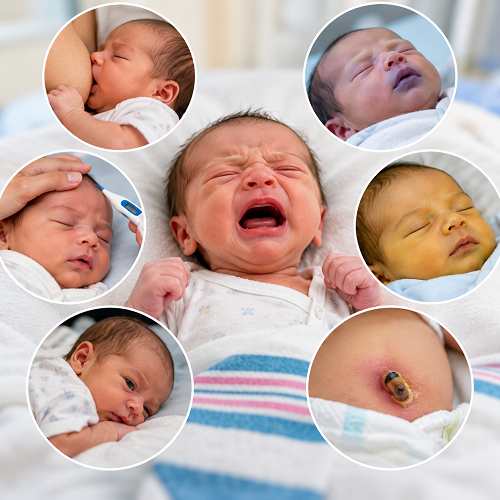
When Should You Seek Emergency Medical Help?
Do not wait for symptoms to improve at home if your newborn has any of these warning signs:
- Difficulty breathing, gasping or severe chest indrawing.
- Blue, grey or unusually pale lips or skin.
- Seizures or repeated unusual jerking movements.
- Unresponsiveness or difficulty waking the baby.
- Fever of 38°C (100.4°F) or higher in a baby younger than three months.
- Inability to feed or a sudden, marked reduction in feeding.
Seek emergency medical care immediately if the baby has severe breathing difficulty, turns blue, has a seizure or becomes unresponsive. A newborn with fever also needs urgent medical assessment. Do not delay care while trying home remedies.
Important Newborn Warning Signs Parents Should Recognise
Difficulty Breathing or Unusually Fast Breathing
Newborns can have brief pauses or irregular breathing. However, persistent fast breathing, grunting, nostril flaring or skin pulling inward around the ribs can indicate respiratory distress.
A breathing rate of 60 or more breaths per minute, counted while the baby is calm, is a warning sign that needs prompt medical assessment. Count the breaths for a full minute. Do not spend time counting if the baby is struggling to breathe.
Breathing difficulty is one of the most important Newborn Warning Signs. Blue lips, severe chest indrawing or gasping require emergency help.
Fever or an Unusually Low Body Temperature
A temperature of 38°C (100.4°F) or higher in a newborn can indicate a serious infection. Do not wait for other symptoms to appear before seeking medical attention.
An unusually cold baby can also be unwell. A temperature below the normal range, especially when accompanied by poor feeding, reduced movement or breathing changes, needs prompt assessment.
Use a reliable thermometer and follow medical guidance on how to measure a newborn’s temperature. Do not give fever medicine without advice from a healthcare professional.
Poor Feeding or Weak Sucking
Most newborns need frequent feeds. A baby who suddenly refuses feeds, cannot suck properly or takes much less milk than usual may be unwell.
Watch for weak sucking, repeated difficulty latching, unusual tiredness during feeds or vomiting that prevents the baby from keeping milk down. These changes are especially concerning when the baby also has fever, jaundice or fewer wet nappies.
Feeding difficulties are important Newborn Warning Signs because illness and dehydration can affect a baby’s ability to feed. Speak to a pediatrician promptly rather than forcing feeds.
Excessive Sleepiness or Reduced Movement
Newborns sleep for much of the day. However, normal sleep should not make a baby impossible to wake for feeding. Unusual limpness, weak crying, reduced spontaneous movement or poor responsiveness can signal illness.
Pay attention to changes from the baby’s usual behaviour. A newborn who becomes unusually sleepy and feeds poorly needs urgent medical assessment. If the baby is unresponsive or difficult to wake, seek emergency help.
Yellow Skin or Eyes: When Jaundice Becomes Concerning
Newborn jaundice causes yellowing of the skin and the whites of the eyes. It is common, but its timing and severity matter. Yellow skin during the first 24 hours after birth needs urgent medical assessment.
Seek prompt medical care if the yellow colour spreads, the baby feeds poorly or the baby becomes unusually sleepy. Yellow palms or soles are also warning signs. Do not rely on sunlight or home remedies to treat jaundice.
A pediatrician may examine the baby and check the bilirubin level to decide whether treatment is needed.
Fewer Wet Nappies or Signs of Dehydration
Urine output helps parents monitor feeding and hydration. During the first few days, the number of wet nappies usually increases as feeding becomes established. After about day five, many well-fed newborns have around six or more wet nappies in 24 hours.
However, nappies should not be the only measure of health. Very little urine, a dry mouth, poor feeding or unusual sleepiness needs medical attention. Seek prompt advice if your baby has fewer wet nappies than expected for their age.
Parents concerned about feeding or weight gain can also read about poor weight gain in children for further guidance.
Repeated Vomiting or Green Vomit
Small amounts of milk coming back after a feed can be common. Forceful or repeated vomiting is different and may indicate a medical problem.
Green vomit, blood in vomit or a swollen abdomen needs urgent medical assessment. Do not assume that repeated vomiting is simply gas or normal spit-up. Seek emergency care if your newborn vomits green fluid.
Redness or Discharge Around the Umbilical Cord
The umbilical stump should gradually dry and fall off. Keep the area clean and dry, and follow your healthcare professional’s cord-care instructions.
Redness spreading onto the surrounding skin, pus, a foul smell or bleeding that continues needs medical attention. These changes can indicate an infection, which may spread quickly in a newborn.
Normal Newborn Behaviour vs Warning Signs
Some behaviours can be normal during the early weeks. Occasional sneezing, hiccups and brief irregular breathing may occur in healthy babies. Small milk spills after feeding can also be normal.
The important difference is how the baby looks and behaves overall. Breathing difficulty, poor feeding, fever, reduced movement or unusual responsiveness should never be dismissed as normal newborn behaviour.
When you are unsure, contact a healthcare professional. Do not wait for several symptoms to appear before seeking help.
What Should Parents Do When They Notice a Warning Sign?
Stay calm and assess the baby’s immediate condition. If the baby has severe breathing difficulty, blue lips, a seizure or unresponsiveness, seek emergency help immediately.
- Note when the symptom started and how it has changed.
- Record the baby’s temperature if you can do so without delaying care.
- Tell the doctor about feeding, vomiting and wet nappies.
- Bring the baby’s birth records and available medical documents.
- Avoid unprescribed medicines, herbal remedies and home treatments.
Routine follow-up is also important, even when a newborn appears healthy. A newborn health check-up in Roorkee can help monitor feeding, weight, jaundice and early development.
Newborn Care and Pediatric Guidance in Roorkee
Dr. Tanveer Ahmad is a pediatrician practicing in Roorkee since 2018 at Dr Hera Skin Hair & Children Hospital. His clinical services include newborn care, vaccination, routine health check-ups, growth monitoring, nutrition counselling and treatment of childhood illnesses.
Parents seeking guidance about neonatal care in Roorkee can learn more about newborn healthcare and follow-up. Regular check-ups and timely vaccination for babies in India also help support preventive healthcare.
Dr. Tanveer Ahmad – Pediatrician in Roorkee Dr Hera Skin Hair & Children Hospital Malviya Chowk, Near Bank of India Roorkee, Uttarakhand – 247667, India Phone: +91 9548732883 View hospital location on Google Maps
Frequently Asked Questions About Newborn Warning Signs
What are the most serious warning signs in a newborn?
Breathing difficulty, blue lips, seizures, unresponsiveness, fever and inability to feed are serious warning signs. Seek urgent medical care when these symptoms occur.
Is a temperature of 38°C dangerous for a newborn?
Yes. A temperature of 38°C (100.4°F) or higher in a baby younger than three months needs urgent medical assessment, even if the baby otherwise appears well.
Is newborn jaundice always dangerous?
Not always, but the timing and severity matter. Jaundice during the first 24 hours, yellow palms or soles, poor feeding or unusual sleepiness needs prompt medical assessment.
When should I contact a pediatrician about feeding problems?
Contact a pediatrician promptly if your baby has weak sucking, refuses feeds, feeds much less than usual or produces fewer wet nappies. Seek emergency care if the baby is unresponsive or severely unwell.