
Every parent wants to see their child grow healthy and active. However, many parents become worried when their child is not gaining weight as expected. While some children are naturally lean because of genetics, poor weight gain can also indicate nutritional deficiencies, feeding problems, digestive disorders, infections, or an underlying medical condition.
If your child is not gaining weight, do not ignore the signs. Early evaluation helps identify the actual cause and prevents long-term effects on growth, brain development, and immunity.
At Dr. Tanveer Child Specialist, every child receives a personalized growth assessment to determine why a child is not gaining weight and what treatment is needed for healthy development.
Why Is My Child Not Gaining Weight?
It is common for parents to compare their child’s weight with other children. However, every child grows differently. The concern begins when a child is not gaining weight consistently or suddenly stops following their normal growth curve.
Doctors evaluate weight by considering:
- Age
- Birth weight
- Height
- Head circumference
- Growth charts
- Developmental milestones
- Daily nutrition
A child who remains active, eats well, and continues growing steadily may simply have a smaller body structure. However, a child who loses weight or shows poor growth needs medical evaluation.
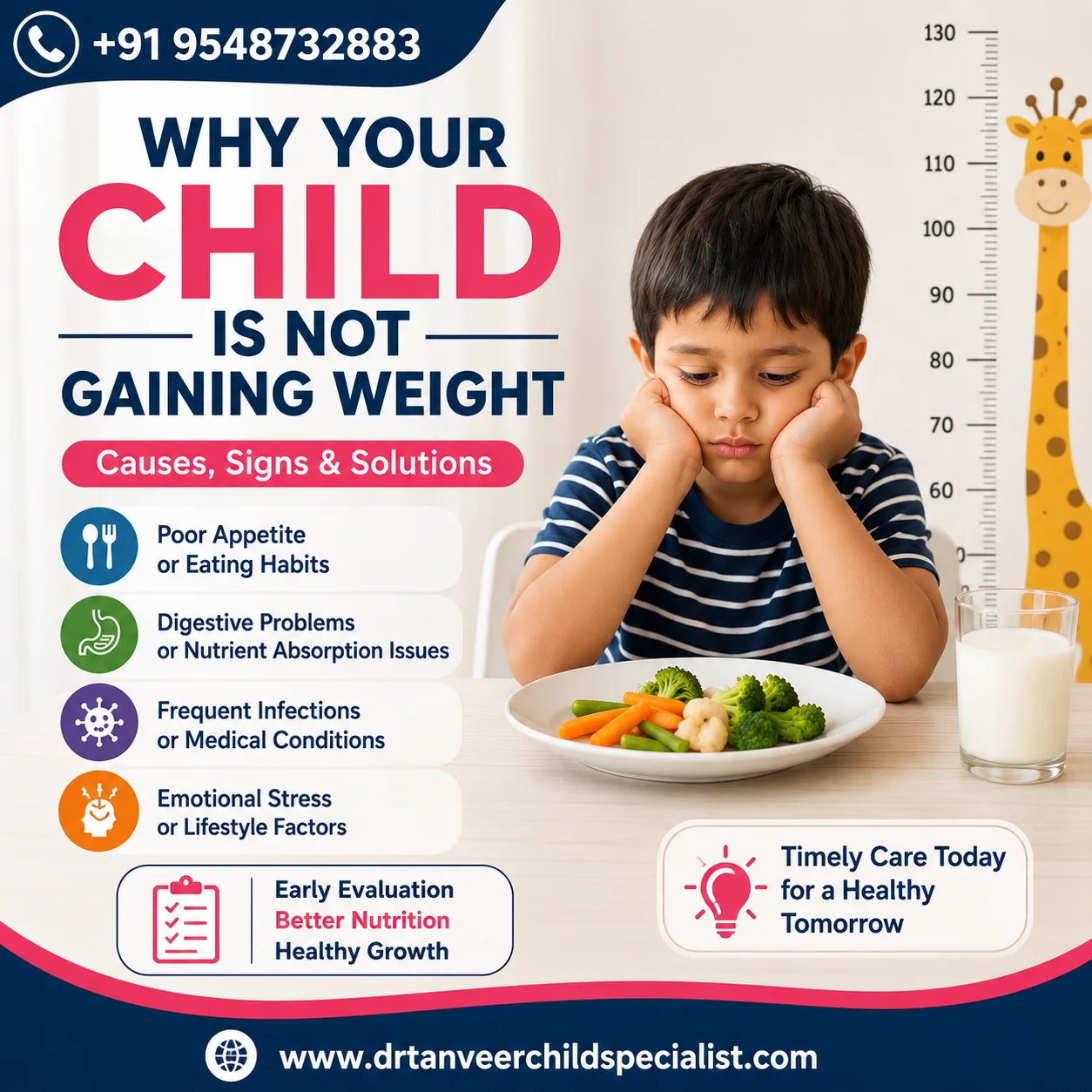
When Should Parents Worry If Their Child Is Not Gaining Weight?
You should consult a pediatrician if your child is not gaining weight and you notice any of the following signs.
- Newborn does not regain birth weight within two weeks.
- Baby gains very little weight during the first six months.
- Weight suddenly stops increasing.
- Clothes remain the same size for several months.
- Height growth also slows down.
- Your child becomes weak or less active.
- Developmental milestones are delayed.
- Poor appetite continues for several weeks.
Ignoring these symptoms may delay treatment. Early medical care gives the best chance for normal growth.
Common Symptoms When a Child Is Not Gaining Weight
If a child is not gaining weight, parents may notice several physical and behavioral changes.
- Low body weight for age.
- Thin arms and legs.
- Poor muscle development.
- Frequent illness.
- Low energy throughout the day.
- Poor appetite.
- Delayed sitting, crawling, walking, or speaking.
- Irritability or excessive crying.
- Difficulty concentrating during school.
- Reduced immunity.
These symptoms should never be ignored, especially during infancy and early childhood when brain growth is at its fastest.
Most Common Causes Why a Child Is Not Gaining Weight
There is no single reason why a child is not gaining weight. In many cases, multiple factors work together.
1. Inadequate Nutrition
The most common reason is insufficient calorie intake. Children may eat small portions or refuse healthy foods. Some survive mainly on milk, packaged snacks, or sugary drinks, which do not provide balanced nutrition.
Parents can also benefit from professional Infant and Child Nutrition guidance to improve calorie intake and meal quality.
2. Feeding Difficulties
Some babies struggle with breastfeeding or bottle feeding. Older children may have chewing or swallowing problems that reduce food intake.
3. Digestive Disorders
Digestive problems can prevent proper nutrient absorption.
- Celiac disease
- Food allergies
- Lactose intolerance
- Chronic diarrhea
- Inflammatory bowel disease
- Persistent vomiting
These conditions may explain why a child is not gaining weight despite eating adequately.
4. Frequent Infections
Repeated fever, cough, urinary infections, intestinal infections, or parasitic worms increase calorie requirements and reduce appetite.
5. Premature Birth
Premature babies usually require extra nutritional support because feeding and weight gain take longer compared to full-term babies.
Parents of premature infants should schedule regular Neonatal Care consultations to monitor healthy growth.
6. Increased Physical Activity
Some highly active children burn more calories than they consume. They may need additional healthy snacks and calorie-rich meals.
7. Medical Conditions
Sometimes a child is not gaining weight because of an underlying health condition.
- Congenital heart disease
- Thyroid disorders
- Metabolic disorders
- Cystic fibrosis
- Kidney disease
- Chronic liver disease
- Neurological disorders
A detailed pediatric examination helps identify these conditions early.
How Doctors Diagnose Why a Child Is Not Gaining Weight?
Finding the root cause is more important than simply increasing calories.
During the consultation, the pediatrician evaluates:
- Birth history.
- Pregnancy history.
- Family growth pattern.
- Diet history.
- Feeding habits.
- Medical history.
- Growth records.
- Developmental milestones.
A complete Baby Health Checkup helps assess your child’s overall health, nutritional status, and growth progress.
If necessary, blood tests, urine tests, stool examination, thyroid profile, allergy testing, or other investigations may be advised based on your child’s symptoms.
Effective Treatment If Your Child Is Not Gaining Weight
The treatment plan depends on the underlying cause. There is no single medicine that works for every child. A pediatrician first identifies why a child is not gaining weight and then prepares an individualized treatment plan.
1. Improve Daily Nutrition
Balanced nutrition plays the biggest role in healthy weight gain. Children need enough calories along with protein, healthy fats, vitamins, and minerals.
Healthy food choices include:
- Milk and dairy products.
- Eggs.
- Paneer.
- Curd.
- Dal and pulses.
- Chicken and fish (age appropriate).
- Seasonal fruits.
- Green vegetables.
- Dry fruits in suitable quantities.
- Whole grains.
Avoid replacing proper meals with chocolates, sugary drinks, chips, or processed snacks. These may increase calories but do not support healthy growth.
2. Treat the Underlying Medical Condition
If a child is not gaining weight because of infections, digestive disorders, thyroid problems, food allergies, or other illnesses, treating the root cause usually improves appetite and weight gain.
3. Monitor Growth Regularly
Regular growth monitoring is essential. Tracking weight, height, and head circumference helps ensure your child follows a healthy growth pattern.
Children with poor weight gain may require scheduled follow-up visits for ongoing assessment and dietary adjustments.
4. Parent Counseling
Many feeding problems can be corrected through proper guidance. Parents often need support in understanding meal timing, food portions, feeding techniques, and age-appropriate nutrition.
Professional Parent Counselling for Child Nutrition, Behavior & Development helps families build healthy eating habits and improve long-term growth.
Can Slow Weight Gain Affect Child Development?
Yes. When a child is not gaining weight for a prolonged period, the effects may extend beyond physical growth.
Possible complications include:
- Delayed brain development.
- Reduced immunity.
- Frequent infections.
- Poor concentration.
- Learning difficulties.
- Behavioral changes.
- Weak muscles.
- Delayed motor skills.
- Poor school performance.
Early diagnosis and timely intervention significantly reduce the risk of long-term complications.
How Parents Can Support Healthy Weight Gain at Home?
- Serve small, frequent meals instead of forcing large portions.
- Include protein in every major meal.
- Offer fresh fruits instead of packaged snacks.
- Limit sugary drinks and junk food.
- Maintain a regular meal schedule.
- Encourage outdoor play and physical activity.
- Ensure adequate sleep every day.
- Do not compare your child’s growth with other children.
- Attend regular pediatric growth checkups.
These simple lifestyle habits often make a meaningful difference when combined with professional medical guidance.
When Should You Visit a Pediatrician?
Book an appointment immediately if:
- Your child is not gaining weight for several months.
- Your baby refuses feeds repeatedly.
- Weight loss is noticeable.
- Your child has persistent diarrhea or vomiting.
- Developmental milestones are delayed.
- Your child appears weak or unusually tired.
- There is recurrent fever or frequent infections.
- You are worried about your child’s overall growth.
Early medical evaluation helps detect nutritional deficiencies and underlying medical conditions before they affect long-term health.
Why Choose Dr. Tanveer Ahmad for Child Growth Monitoring in Roorkee?
Healthy growth requires more than simply increasing food intake. It requires accurate diagnosis, careful monitoring, and individualized care.
Dr. Tanveer Ahmad has been providing comprehensive pediatric care in Roorkee since 2018. At Dr Hera Skin Hair & Children Hospital, every child receives evidence-based evaluation for growth concerns, nutrition, developmental milestones, newborn care, vaccination, and preventive healthcare.
Growth assessment includes detailed history, physical examination, nutritional evaluation, growth chart analysis, and personalized treatment recommendations.
Learn more About Dr. Tanveer Ahmad or explore all Pediatric Services available for children of all age groups.
Frequently Asked Questions (FAQs)
Is it normal if my child is not gaining weight but is active?
Some children naturally have a lean body type. However, if your child is not gaining weight consistently, a pediatric evaluation is recommended to rule out nutritional or medical causes.
Which foods help children gain healthy weight?
Protein-rich foods, dairy products, eggs, pulses, paneer, fruits, vegetables, healthy fats, and whole grains support healthy growth when included in a balanced diet.
Can worms cause poor weight gain?
Yes. Intestinal worm infections may reduce nutrient absorption and appetite, leading to slow weight gain in some children.
Should I give weight gain supplements without consulting a doctor?
No. Supplements should only be given after medical evaluation. The treatment depends on why a child is not gaining weight.
How often should my child’s growth be checked?
Regular pediatric checkups help monitor weight, height, and developmental milestones. The frequency depends on your child’s age and overall health.
Book an Appointment for Child Growth Assessment in Roorkee
If your child is not gaining weight, do not wait for the problem to become serious. Early diagnosis can prevent growth delays and support healthy physical and mental development.
Schedule a consultation with Dr. Tanveer Ahmad – Pediatrician in Roorkee for a complete growth assessment, nutrition guidance, and personalized treatment plan.
Dr. Tanveer Ahmad – Pediatrician in Roorkee
Dr Hera Skin Hair & Children Hospital
Malviya Chowk, Near Bank of India,
Roorkee, Uttarakhand – 247667, India
Phone: +91 9548732883
Website: Contact Dr. Tanveer Ahmad
Medical Disclaimer: This article is intended for educational purposes only and should not replace professional medical advice, diagnosis, or treatment. If your child is not gaining weight or has any concerning symptoms, consult a qualified pediatrician for an accurate evaluation and personalized care.